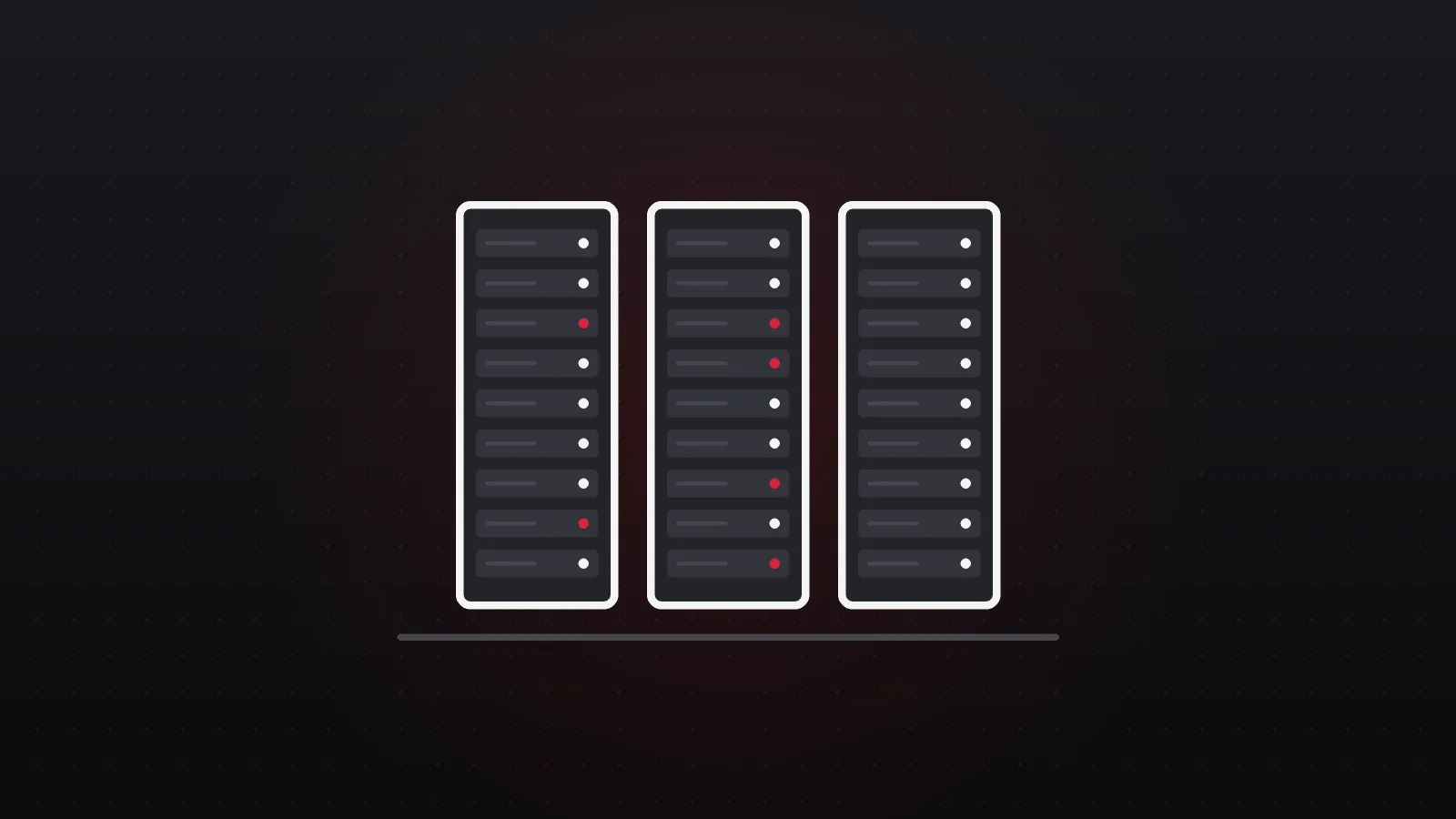
The IEA estimates data centers used about 415 TWh of electricity in 2024, around 1.5% of the global total. Its base case reaches roughly 945 TWh by 2030, close to 3%, with AI the main driver and the United States leading the growth.
Table of contents 7 sections
- Data centers used about 415 TWh in 2024, roughly 1.5% of global electricity, according to the IEA.
- The IEA's base case reaches about 945 TWh by 2030, with the US and China leading the growth.
- Data centers are only about a tenth of global demand growth, but the load is concentrated in a few regions.
- Forecasts are uncertain: the IEA's 2035 scenarios range from 700 to 1,700 TWh.
- Check units and whether a figure is a forecast or a measurement before comparing headlines.
Data center energy demand is one of the few technology numbers that grid planners, utilities and investors all watch at once. According to the International Energy Agency (IEA), data centers used about 415 terawatt-hours (TWh) of electricity in 2024, roughly 1.5% of global consumption. Its base case has that figure rising to about 945 TWh by 2030, close to 3% of the world's electricity.
Data center energy demand: what the IEA numbers say
The figures come from the IEA's Energy and AI report.
- 2024: about 415 TWh, around 1.5% of global electricity use.
- 2030, base case: about 945 TWh, which is more than Japan's entire electricity consumption today.
- Where the growth lands: the United States accounts for the largest share of the increase, followed by China.
- A range, not a point: by 2035 the IEA's scenarios span 700 to 1,700 TWh, which is a reminder that this is a forecast and not a measurement.
Context matters. The IEA says data centers account for only around a tenth of global electricity demand growth to 2030. Industry, air conditioning and electric vehicles add more in total. The concern is concentration: the new demand arrives in a few regions at once, and grids cannot expand as quickly as server halls can be built.
Where a data center's power goes
- Servers and accelerators. Processors and AI chips take the largest share.
- Cooling. Heat has to be removed, using air, liquid or a mix of both.
- Power conversion and distribution. Every step from the grid to the chip loses some energy.
- Networking and storage. A smaller share, but never zero.
Engineers summarize the overhead with power usage effectiveness, or PUE: total facility energy divided by the energy used by the computing equipment. A PUE close to 1.0 means almost all the power reaches the computers.
Why AI raises the stakes
Racks built for AI draw several times the power of racks built for ordinary web hosting, and they give off correspondingly more heat. Training a large model keeps thousands of chips busy for weeks. Then comes inference, the everyday use of the finished model, where each request is small but there are billions of them. As AI features reach more products, inference is becoming a growing share of the load.
Why forecasts differ so much
- Efficiency gains. Chips and models keep getting more efficient, which could slow growth.
- Adoption. Nobody knows how fast people and businesses will use AI features.
- Bottlenecks. Chip supply, transformers and grid connections can cap how much gets built.
- Limited disclosure. Many operators publish little about their real consumption.
What it means for grids, bills and the climate
In places where data centers cluster, such as parts of Ireland and the US state of Virginia, they already take a large share of local electricity, and new connections can wait years. Operators respond with long-term power purchase agreements for wind, solar, gas and nuclear power. Whether the extra demand raises emissions depends on what powers it. Water used for cooling is a separate local issue.
What operators are doing about it
- Efficiency. Better chips, tuned software and smaller models reduce the energy needed per task.
- Liquid cooling. It removes heat more effectively than air in dense AI racks.
- Siting. New campuses are planned near spare generation or with their own on-site power.
- Flexible load. Some operators agree to shift or pause non-urgent work when the grid is under strain.
How to read the next data center headline
- Check the units. Megawatts measure capacity at a moment; megawatt-hours and terawatt-hours measure energy used over time.
- Ask whether it is a forecast or a measurement, and whose scenario it is.
- Be careful with per-question figures for AI. They vary widely with the model, the hardware and what is counted.
The money side of the same story appears in our report on Alphabet's third quarter, where free cash flow turned negative, and in our explainer on free cash flow. For how the cloud itself is sold, see IaaS vs PaaS vs SaaS.
Frequently asked
- Energy and AI — International Energy Agency
- AI is set to drive surging electricity demand from data centres — International Energy Agency
0 comments
No comments yet — be the first.