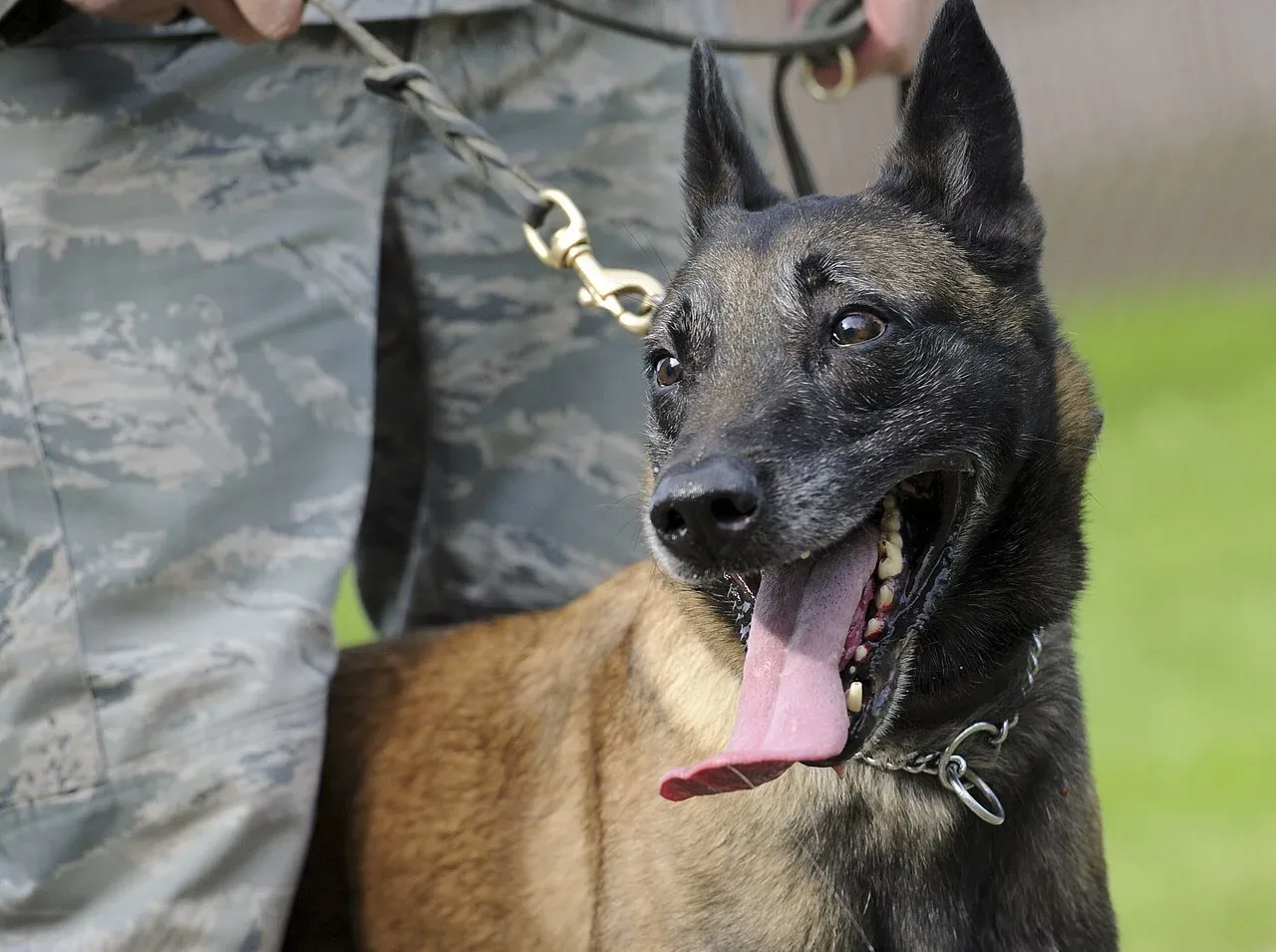
Warhound is a startup that emerged on 22 October 2026 with $200 million to clone and genetically enhance working dogs for the US military, police and first responders. Conceived by Colossal's Ben Lamm and Anduril's Palmer Luckey, it is reportedly valued at $1.2 billion. The first puppies are expected in early 2027.
Table of contents 6 sections
- Warhound launched on 22 October 2026 with $200 million from investors including Sequoia, 8VC and In-Q-Tel, at a reported $1.2 billion valuation.
- It plans to clone and gene-edit Belgian Malinois and German Shepherd dogs for military, police and emergency work.
- Anduril will supply vests, protective gear and sensor goggles; Colossal licenses the biotechnology and Viagen handles cloning.
- Warhound says more than 80 percent of US military working dogs come from Europe and fewer than half are judged fit to serve.
- The first births are expected early next year, with service ideally starting within two years.
Warhound came out of stealth on 22 October with $200 million in funding and a plan to build Warhound military dogs: cloned, genetically enhanced working dogs for the US military, police and emergency responders. Investors include Sequoia, 8VC, Corner Ventures and In-Q-Tel, the venture arm backed by the CIA and other US intelligence agencies, and the round reportedly values the company at $1.2 billion, TechCrunch reported.
None of the dogs exist yet. The first batch is being cloned and incubated, with births expected early next year and service ideally starting within two years.
Who is behind Warhound
The idea came from Ben Lamm, chief executive of Colossal Biosciences, the Dallas company known for its efforts to bring back the woolly mammoth and the dodo, and Palmer Luckey, co-founder of the defense company Anduril. According to TechCrunch, Luckey is a partner but owns no equity. Colossal owns equity in Warhound and licenses its technology to it.
Day-to-day leadership sits with David Spirk, a Marine Corps veteran who was previously a senior counselor at Palantir Technologies, Stars and Stripes reported. Stripes described Warhound as a joint venture between Colossal and Anduril, based in Dallas, with Sequoia Capital leading the seed round.
Viagen, another Colossal-owned company, will handle the cloning.
What Warhound says is wrong with the current supply
The company's pitch rests on two numbers. Warhound says more than 80 percent of US military working dogs come from European breeders, and that after a training and procurement process lasting about three years, fewer than half are judged fit to serve. That is a long, expensive pipeline with a high failure rate, and it depends on suppliers outside the country.
The program it wants to serve is large and old. The US Army set up its K-9 Corps in 1942, and the Military Working Dog Program now has more than 2,200 dog teams, according to Stars and Stripes. Warhound argues that a domestic pipeline would secure a military asset and reduce the number of dogs that wash out of training.
How the Warhound military dogs would be made
The team is starting with Belgian Malinois and German Shepherd cell lines. It plans to edit genes to improve health, longevity, speed and sense of smell, TechCrunch reported. Colossal brings genetic engineering, cloning and biobanking, which Warhound describes as a vertically integrated model.
Anduril's contribution is equipment rather than biology. It will supply protective vests, ear and eye protection, and sensor-equipped goggles that share data with handlers. Stars and Stripes said the gear includes AI and augmented reality headgear called Eagle Eye. Lamm described these as enhancements "on top of the dog, not in the dog."
Pricing has not been set. Target buyers include the Department of Defense, military service groups, police departments and first responders, and Lamm says the company has briefed many government groups.
Animal welfare and the open questions
The American Humane Society is helping certify Warhound's training program, and retired dogs may enter its program for reuniting them with former handlers. Its president, Robin Ganzert, said the goal is to "make health, welfare, and exceptional care fundamental to a working-dog program from the very beginning."
That endorsement does not settle the harder questions, and neither TechCrunch nor Stars and Stripes reported detailed objections from outside critics. The ones worth asking are practical:
- How will the company show that gene edits improve health rather than create new problems that appear later in a dog's life?
- Will the Pentagon buy cloned, edited animals, and on what testing standard?
- How will police buyers be held to the same handling rules as military units?
Lamm's answer on civilian safety so far is that each dog will be trained like any military working dog and managed by whoever buys it. Whether the project becomes an operational capability will depend on research results and evidence from real deployments.
Why investors paid unicorn money for puppies that are not born yet
A $1.2 billion valuation for a company with no product is unusual even in this market. Part of the explanation is Colossal's track record of spinning out companies investors want: Stars and Stripes noted that Astromech, a Colossal spinout applying AI to biological systems, reached a $3.8 billion valuation. Part of it is the defense boom, which has pulled venture money toward anything with a plausible government customer. In-Q-Tel's presence gives the deal credibility in Washington.
The rest is a bet on the founders. Lamm has shown he can raise money for long-dated science, and Luckey has shown he can sell new hardware to the Pentagon. Warhound needs both skills. For how a seed round of this size compares with a normal one, see our guide to startup funding stages.
What to watch next
- The first births, expected early in 2027, and any health data the company publishes on them.
- Government contracts. A Defense Department or police pilot would show real demand.
- Regulatory scrutiny of gene-edited animals used in public settings.
- Pricing, which has not been set and will decide whether police departments can afford the dogs.
0 comments
No comments yet — be the first.