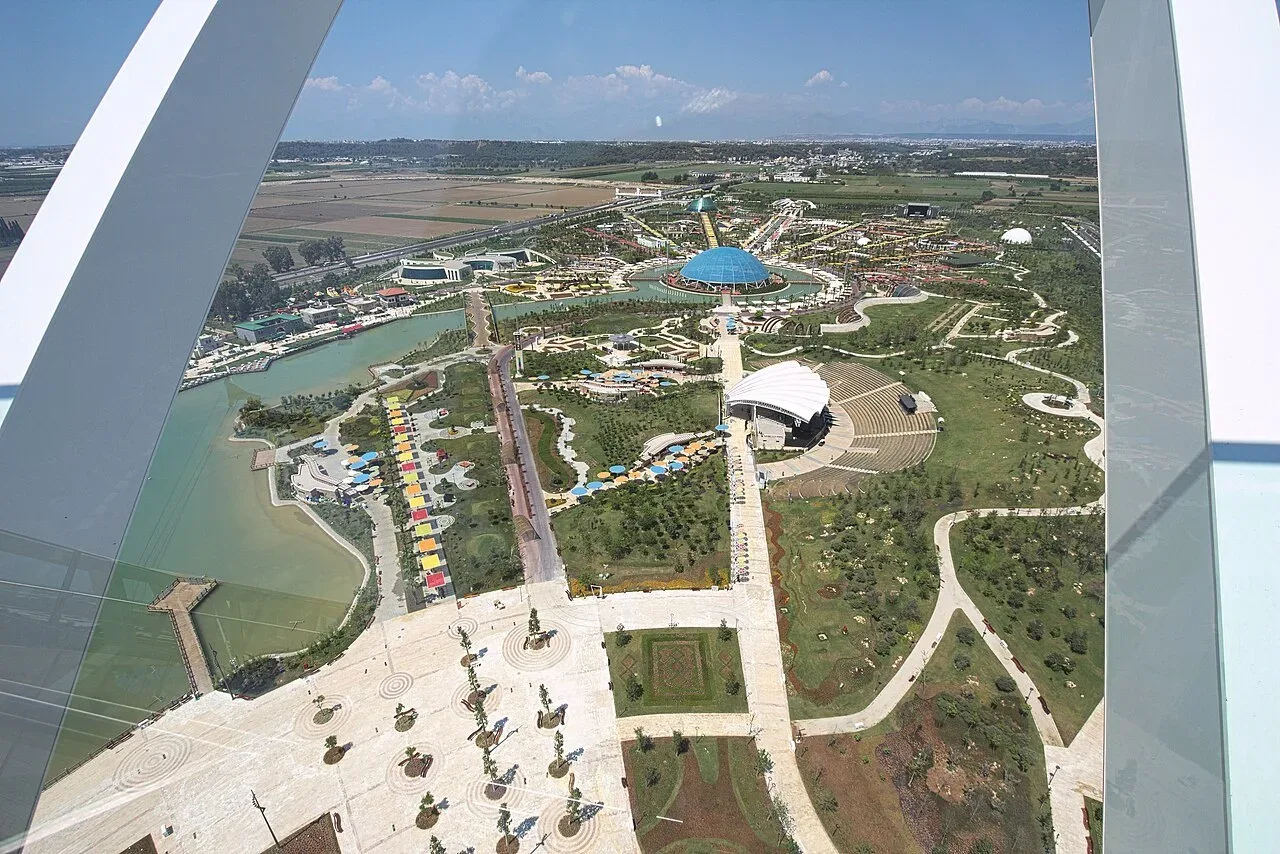
COP31, the 2026 UN climate change conference, takes place at the Antalya Expo Center in Türkiye from 9 to 20 November 2026, with a World Leaders' Summit on 11 and 12 November. Türkiye's Murat Kurum is COP President, while Australia's Chris Bowen leads the negotiations under a deal agreed at COP30.
Table of contents 5 sections
- COP31 runs from 9 to 20 November 2026 at the Antalya Expo Center in Türkiye, with leaders attending on 11 and 12 November.
- Türkiye holds the presidency under Murat Kurum, while Australia's Chris Bowen is President of Negotiations with authority over the talks.
- The agenda centres on adaptation finance, loss and damage, access to climate finance and the roadmap to $1.3 trillion.
- Türkiye's Action Agenda aims to raise electricity's share of final energy demand to 35 percent by 2035 but has no explicit fossil fuel phase-out initiative.
- The WMO reported record CO2 of 426.8 ppm in 2025 just before the summit.
The 2026 UN climate conference, COP31 Antalya, opens on 9 November at the Antalya Expo Center in Türkiye and runs until 20 November, with world leaders due on 11 and 12 November. For the first time, two countries share the job of running it: Türkiye holds the presidency, while Australia's climate minister, Chris Bowen, leads the formal negotiations.
The science going in is grim. On 27 October the World Meteorological Organization reported that carbon dioxide averaged a record 426.8 parts per million in 2025, 153 percent of the pre-industrial level, and said it released the figures to give COP31 negotiators authoritative data.
Who is in charge at COP31 Antalya?
The arrangement came out of a stand-off. Both Türkiye and Australia bid to host the 2026 summit, and UN rules require consensus, with the meeting defaulting to Bonn if none is reached. After a week of negotiations during COP30 in Belém in November 2025, the two settled on a compromise: Türkiye hosts, and Bowen becomes "President of Negotiations".
The roles, as reported by Climate Home News and summarised on Wikipedia, are:
- Murat Kurum, Türkiye's environment minister, is COP31 President and leads the Action Agenda, the non-negotiated programme involving businesses, cities and citizens.
- Chris Bowen, Australia's climate and energy minister, is Vice-President and President of Negotiations. An official modalities document gives him "exclusive authority in relation to the negotiations".
- Fatma Varank is Türkiye's chief climate negotiator.
The fine print matters. Kurum has said "the final decision lies with the presidency of COP31", while Bowen says his role lets him manage the talks, prepare draft texts and issue the overarching "cover" decision. Disagreements, the modalities document says, go to consultation "until the difference is resolved to mutual satisfaction". Split arrangements have happened before, at COP23 (Fiji presiding, hosted in Germany) and COP25 (Chile presiding, moved to Spain), but never with power divided this way between two countries.
What is on the negotiating table
The formal agenda builds on decisions from earlier summits. According to a briefing published on 8 October by the UN Environment Programme Finance Initiative, the main items include:
- Scaling up adaptation action and the finance to pay for it.
- Loss and damage support for countries hit by climate disasters.
- Access to climate finance and aligning investment flows with the Paris Agreement.
- The Global Goal on Adaptation and the Just Transition Mechanism.
- Carrying forward the "Baku to Belém Roadmap to $1.3 trillion" in climate finance, plus roadmaps on transitioning away from fossil fuels and on halting deforestation.
Countries' climate plans are the other benchmark. By mid-2026, 147 parties had submitted updated national climate plans, known as NDCs, under the Paris Agreement, UNEP FI said.
Türkiye's Action Agenda targets
Outside the negotiating rooms, the Turkish presidency has set its own 2035 goals. UNEP FI lists them as raising electricity's share of final energy demand from just over 20 percent to 35 percent, halving the growth of global waste, cutting the energy intensity of buildings by 25 percent and lifting global circular material use to at least 15 percent.
What the list leaves out is telling. Kurum told Climate Home News that the Action Agenda has no explicit initiatives on transitioning away from fossil fuels, arguing that electrification through heat pumps and electric vehicles would "lead to a reduction in the use of fossil fuels". He also accepted that the 1.5C goal is no longer possible and said limiting warming to "around 1.5C" would be a success. Electrification on that scale also means much bigger grids, a theme we covered in our look at how much power data centres use.
The criticism Türkiye faces
Environmental groups have taken aim at the host. Greenpeace has criticised Türkiye's coal subsidies and emissions, and Urgewald has criticised the environment ministry's support for coal power, including a proposed coal plant expansion in Çanakkale. Civil society access is another worry: more than 200 activists were arrested around the January NATO summit in Ankara, where demonstrations were temporarily banned, and Kurum has said only that his team will "try to meet" requests on protest rights, according to Climate Home News.
The Pacific angle is Australia's to carry. A pre-COP meeting was held in Fiji from 5 to 8 October, with a leaders' event in Tuvalu so delegates could see climate impacts on low-lying islands first-hand.
What to watch at COP31 Antalya
Four tests will decide whether the summit counts as a success:
- The cover decision. Bowen will draft it. Watch whether it repeats or strengthens the COP28 language on transitioning away from fossil fuels in energy systems, which Kurum says COP31 will "build on".
- Adaptation money. Developing countries want concrete numbers for adaptation and loss and damage, not more roadmaps.
- The split presidency under pressure. Both men say they are working together smoothly. The real test comes in the final overnight sessions, when a single chair usually brokers the last compromise.
- Leaders' attendance. The World Leaders' Summit falls on days three and four, later than usual, and turnout will signal how much political weight capitals put on the talks.
For background, read Climate Home News on the presidency deal and UNEP FI's agenda briefing. The next conference after Antalya is scheduled for Addis Ababa in 2027, so anything left unresolved in Türkiye will land on Ethiopia's desk.
Frequently asked
- Türkiye says it has "final decision" at COP31 despite Australia running negotiations — Climate Home News
- From Belém to Antalya: What COP31 means for financial institutions — UNEP Finance Initiative
- Greenhouse gas levels once again reach record high — World Meteorological Organization
- 2026 United Nations Climate Change Conference — Wikipedia
0 comments
No comments yet — be the first.