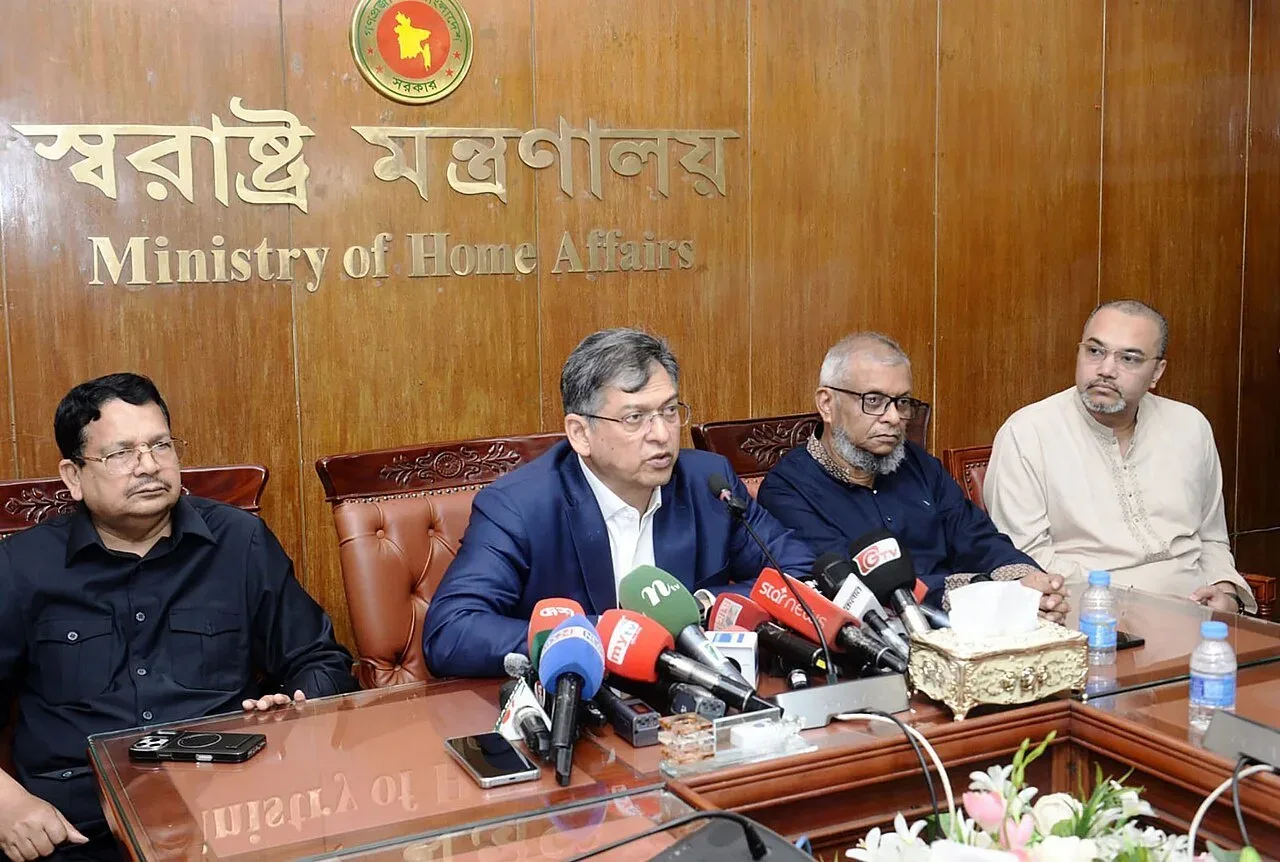
A majority of Bangladesh's wage board agreed on 25 November 2026 to raise the garment minimum wage from 12,500 to 17,500 taka a month, according to Al Jazeera. Workers had demanded 30,000 taka. The raise takes effect in December, with the new pay received in January.
Table of contents 6 sections
- Bangladesh's wage board majority agreed on 25 November 2026 to lift the garment minimum from 12,500 to 17,500 taka a month.
- Protesters had demanded 30,000 taka, and it was unclear whether workers would accept the lower figure.
- The raise takes effect in December, and workers receive the new pay in January, Al Jazeera reports.
- The BGMEA estimates the protests cost the industry $428 million in losses and moved orders worth $254 million abroad.
- Garments earn roughly $38 billion a year and account for about four-fifths of Bangladesh's exports.
The Bangladesh garment minimum wage would rise from 12,500 taka to 17,500 taka a month after the government-appointed wage board announced on Wednesday, 25 November 2026, that a majority of its members had agreed to the increase, Al Jazeera reported, citing AFP. Protesters had asked for 30,000 taka, and it was unclear whether workers would accept the lower figure. The raise takes effect in December, and workers receive the new pay in January.
What exactly did the wage board decide?
Al Jazeera says the board's chairman announced that a "majority" agreed to the new level. In dollar terms the article puts the change at about $100 to about $136 a month, and its headline calls it a 36% rise. The taka figures it cites work out differently: 12,500 to 17,500 is a 40% increase. The gap appears to come from the dollar conversions, but the article does not explain it, so treat the percentage with care and rely on the taka numbers.
Babul Akhter, the labour representative on the board, said: "Although we are not completely satisfied, the outcome is not entirely bad either." He urged workers to return to their factories. He also said garment workers previously had wage revisions every five years, while this one comes after three.
How did the Bangladesh garment minimum wage dispute reach this point?
Reuters reported on 1 November that protests the previous day, Saturday, had led the government to plan a new wage board. Labour and Employment Minister Ariful Haque Chowdhury said the review addressed workers' key demand, according to that Reuters report in the Kathmandu Post. Workers said rising food, housing, transport and healthcare costs had sharply eroded their purchasing power.
The same report said about 30 factories in Ashulia, an industrial hub on the outskirts of Dhaka, declared holidays, according to local police superintendent Mohammad Mominul Islam Bhuiyan. Clashes with police there injured several people, including officers, and police used tear gas and sound grenades.
By 4 November, a Reuters report carried by Devdiscourse said the six-member board had agreed to introduce a revised pay structure from December without discussing the size of any increase. Protests were in their fifth day, hundreds of factories had shut during the week, and clashes had broken out in Savar and Gazipur. H&M told Reuters that some factories had temporarily closed but that it had not seen major supply-chain disruptions.
What did the protests cost the industry?
Al Jazeera reports that the Bangladesh Garment Manufacturers and Exporters Association (BGMEA) said on Sunday that the protests had cost the industry an estimated $428 million in losses and moved orders worth $254 million to other countries. Those are the industry body's own estimates, and Al Jazeera does not give an independent check. It does not report any protest deaths.
Manufacturers have their own list of pressures. Reuters said they cite rising production costs, regional competition, weaker demand in key export markets, and uncertainty in energy markets linked to the conflict in the Middle East. For the global energy side of that last point, see our earlier coverage of oil prices and Iran tensions.
Why does the garment sector matter so much to Bangladesh?
Al Jazeera describes the central bank as calling garments the country's "export engine". The sector earns roughly $38 billion a year, employs four million people and accounts for about four-fifths of exports, the article says. Many of the workers are women from rural areas. Bangladesh is the world's second-largest garment exporter, behind China.
Reuters adds that the industry supplies brands including H&M, Zara and Walmart. Selim Raihan, an economics professor at the University of Dhaka, told Reuters that Bangladesh could absorb a significant wage increase if factories improved productivity, and that prolonged unrest could pose a greater threat than higher wages. That is one economist's view, not a consensus.
Will workers accept 17,500 taka?
That is the open question for the Bangladesh garment minimum wage. Al Jazeera's related coverage lists a pay offer that workers rejected on 23 November, and police clashes with workers on 17 November. A garment worker, Bithi Begum, told Reuters earlier in the month: "Every month is a struggle." The new figure is 5,000 taka more than the current minimum but 12,500 taka below the demand, and the sources opened do not show how workers' groups beyond Akhter have reacted.
The article leaves several details unclear. It does not say which board members dissented, whether unions will call further protests, or how the 17,500 taka figure was reached.
What to watch next
Watch whether factories reopen and production resumes in the coming days, since the protests hit a key period for spring and summer export orders, according to Reuters. Watch also for the formal notification of the new pay structure ahead of its December start, and for any response from worker groups that wanted 30,000 taka. Pay in January will be the first test of whether the new scale holds.
Frequently asked
- After weeks of protests, Bangladesh garment workers win 36% pay rise — Al Jazeera
- Bangladesh to form wage board after garment protests shut factories — Kathmandu Post (Reuters)
- Bangladesh agrees new garment pay scale from December amid protests — Devdiscourse (Reuters)
0 comments
No comments yet — be the first.