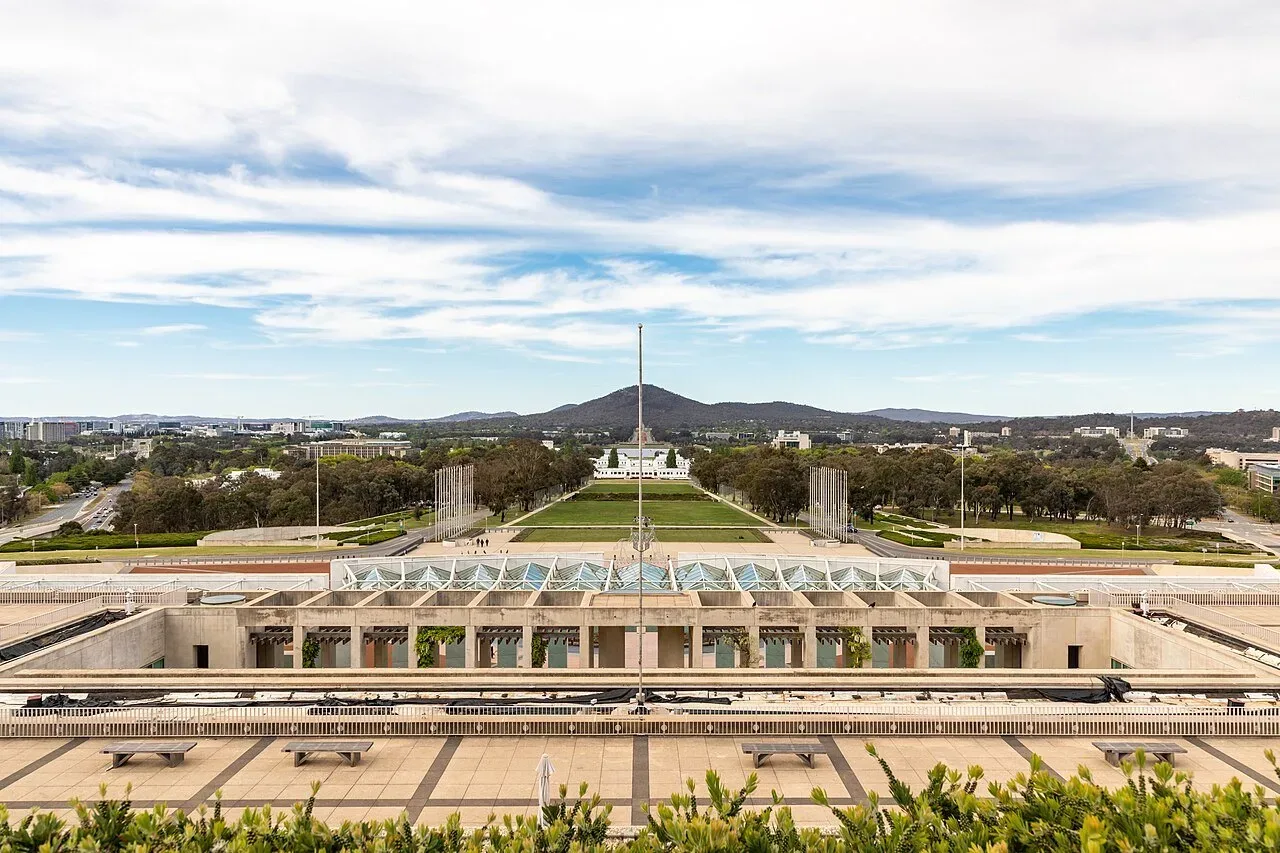
Australia and Solomon Islands signed a security treaty in Canberra on 25 November 2026. It names Australia the primary security partner, affirms there will be no foreign military bases and pledges A$740 million over 10 years, according to Al Jazeera and the ABC. China said the deal should not target any third party.
Table of contents 6 sections
- Anthony Albanese and Matthew Wale signed the treaty at Parliament House in Canberra on 25 November 2026.
- The treaty affirms no foreign military bases in Solomon Islands and names Australia the primary security partner.
- Australia pledges A$740 million over 10 years, which the ABC says is A$670 million in grants and A$70 million in concessional loans.
- The ABC says Honiara told China it will let the 2022 security pact lapse in April 2027, but Wale declined to confirm.
- Opposition figures in Solomon Islands criticised the deal, and China said it should not target any third party.
Australian Prime Minister Anthony Albanese and Solomon Islands Prime Minister Matthew Wale signed the Australia Solomon Islands treaty at Parliament House in Canberra on 25 November 2026, according to Al Jazeera. The agreement names Australia the island nation's "primary security partner" and affirms that Solomon Islands will host no foreign military bases.
What the Australia Solomon Islands treaty says
Al Jazeera, citing AFP, reports that Solomon Islands must keep its sensitive infrastructure "free from militarisation, foreign interference and unauthorised access." That covers ports, airports, energy, telecommunications, and road and bridge construction. The treaty also requires Solomon Islands to consult Australia before striking deals on critical infrastructure or security cooperation. Albanese said that requirement does not apply to deals with members of the Pacific Islands Forum, per the same report.
The ABC reports that the text says security cooperation must come from Pacific Islands Forum members, and that if outside partners are needed for security needs those members cannot meet, Solomon Islands must safeguard regional security. The ABC adds that the treaty does not explicitly ban security partnerships with outside players such as China, and Al Jazeera says the deal does not apply retroactively.
On the Australian side, the ABC reports commitments to help strengthen the Solomon Islands police force, open migration pathways for Solomon Islanders to work in aged care and childcare, and loosen visa arrangements.
How much money is involved
Al Jazeera reports that Australia will provide A$740 million (US$490 million) over 10 years for free education and other programmes. For scale, it cites the World Bank figure of US$1.75 billion for Solomon Islands' gross domestic product.
The ABC reports that the federal contribution is A$740 million, made up of A$670 million in grants and A$70 million in concessional loans. It says the money is for free education, infrastructure, general budget support, security assistance and constituency development funds for MPs. The ABC also notes that leaked texts attributed to Australian High Commissioner Jeff Roach had indicated a figure of A$980 million. Which number applies to which spending line is not fully clear from the published reporting.
The China question
Solomon Islands signed a security pact with China in 2022. The ABC says it confirmed that Wale's government quietly told China it would let that pact lapse when it comes up for renewal in April 2027. Asked about this, Wale declined to confirm, saying there is a non-disclosure clause in the China security pact and policing agreement, and that "ongoing discussions with China" continue.
China's Foreign Ministry, per Al Jazeera, did not confirm whether the pact was scrapped, and said the Australia agreement "should not target any third party." Wale told reporters alongside Albanese: "Solomon Islands has been for a number of years a source of uncertainty and doubt in the region. Those days are gone."
Mike Hughes, director of the Defence Strategy program at the Australian Strategic Policy Institute, wrote in The Strategist that the treaty is a major step toward a stable region but that the contest with China "guarantees impermanence." That is his assessment rather than a settled fact.
Reactions and domestic pressure
The ABC reports that Albanese called the treaty a "new chapter in our partnership to strengthen our shared prosperity and our security." Lachlan Strahan, a former Australian High Commissioner to Solomon Islands, called it a "major step forward" and said the labour mobility and education provisions were "very significant."
Criticism has come from inside Solomon Islands. Manasseh Sogavare, now opposition leader, warned that scrapping the China pact could harm development ties with Beijing and suggested Wale was following Australia's lead, according to the ABC. The opposition also accused Australia of "chequebook diplomacy" over budget support routed into MPs' constituency funds. Wale said the decision to sign was taken by his caucus and cabinet, and that he welcomes another no-confidence motion. Strahan said Wale's numbers are strong but that Solomon Islands politics is volatile.
Where the treaty fits in the Pacific
Al Jazeera notes that Australia has signed similar agreements with Papua New Guinea (a mutual defence treaty in October 2025), Vanuatu (blocking foreign military bases, June 2026) and Fiji (linked to a Quad-backed port project, May 2026). It says Wale's government has reversed course on China policy since taking office after the May election.
Security is only one part of the package. The ASPI analysis lists health, infrastructure, energy, connectivity, climate resilience and governance among the treaty's areas, and says the constituency funds will be tied to World Bank-supported public financial management initiatives. Climate pressure is a recurring Pacific concern, as our report on the COP31 outcome in Antalya shows.
What to watch next
Several points remain open. Wale has not confirmed in public whether the 2022 China pact ends in April 2027, citing the non-disclosure clause. Beijing has so far limited itself to saying the agreement should not target a third party. Wale's standing at home also matters, since he has faced a no-confidence motion this year and says he would welcome another. The published treaty text and any debate in the Honiara parliament will give the clearest further detail.
Frequently asked
- Solomon Islands signs security deal with Australia — Al Jazeera
- Australia signs 'historic' pact with Solomon Islands in blow to China — ABC News
- Solomons treaty locks in a strategic shift towards Australia, away from China — The Strategist, Australian Strategic Policy Institute
0 comments
No comments yet — be the first.