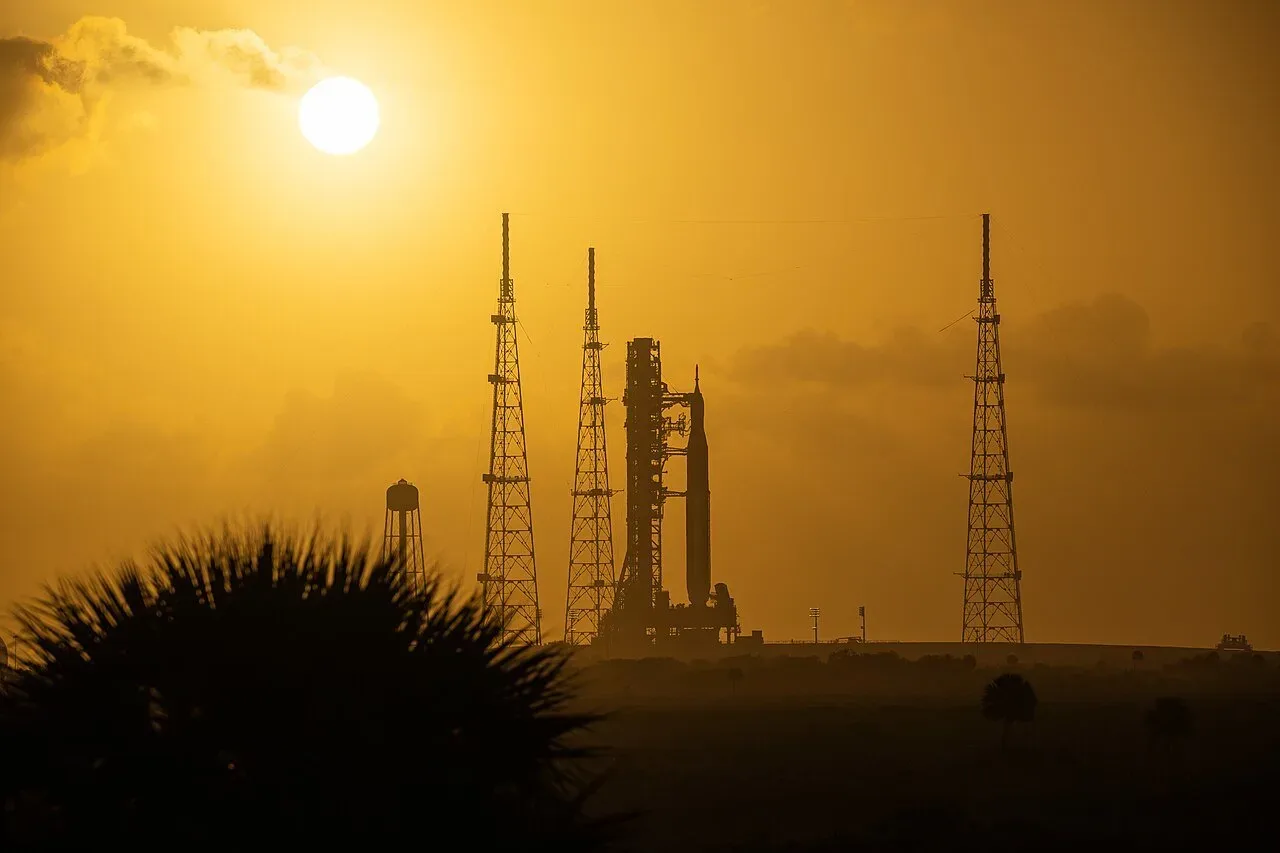
NASA's accelerated Artemis plan targets a crewed Moon landing on Artemis IV in 2028. Artemis III in 2027 becomes a 14-day Earth-orbit test with four astronauts, practising docking with lander test vehicles from SpaceX and Blue Origin. NASA keeps both Starship and Blue Moon Mark 2 as landing options.
Table of contents 6 sections
- Artemis III in 2027 becomes a 14-day Earth-orbit test flight with four astronauts aboard Orion.
- Artemis IV in 2028 is the planned crewed landing, launching from Kennedy Space Center.
- NASA keeps SpaceX's Starship and Blue Origin's Blue Moon Mark 2 as lander options.
- Rocket preparation timelines were cut by about 50 percent, according to NASA.
- NASA has not given exact launch dates within 2027 or 2028.
The Artemis moon landing 2028 target comes from an updated schedule that NASA laid out at a briefing on 23 October and published on its website on 4 November 2026. Under the plan, Artemis III becomes a 2027 test flight in Earth orbit, and Artemis IV carries astronauts to the lunar surface in 2028.
NASA Administrator Jared Isaacman said the campaign must move with urgency, and described a very energized agency. The plan keeps two commercial lander options open, SpaceX's Starship and Blue Origin's Blue Moon Mark 2, instead of relying on one.
What would Artemis III do in 2027?
Artemis III is a test flight, not a landing. NASA describes it as a test flight in Earth orbit lasting 14 days, with four astronauts aboard the Orion spacecraft, launched on the Space Launch System rocket.
The mission's purpose is to practice rendezvous and docking between Orion and lunar lander test vehicles from SpaceX and Blue Origin. The sequence NASA described has Blue Origin launching a test Blue Moon lander first, and Orion docking with it. SpaceX would then launch a test Version 3 Starship lander, and Orion would separate from the first vehicle and dock with Starship.
How would the Artemis moon landing 2028 mission work?
Artemis IV is the crewed landing. Orion and the SLS rocket would launch from Kennedy Space Center in Florida, and the lander would be either Starship or Blue Moon Mark 2, so NASA keeps two paths to the surface.
With Starship, the vehicle would be refueled in Earth orbit, meet Orion, and head to the Moon. With Blue Origin's lander, extra propulsion stages in Earth orbit would send it toward the Moon, and it would meet Orion in a relatively low lunar orbit before descending. NASA also described later missions aiming for more challenging expeditions near the Moon's south pole.
NASA's page does not give exact launch dates within 2027 or 2028, and it does not state the number of astronauts on the landing mission. Those details would need to come from later announcements.
What changed to speed things up?
NASA says it cut rocket preparation timelines by about 50 percent. It gave one example of in-house work: engineers redesigned, built and tested a fuel-line component in five months, at roughly one-tenth of the cost of an earlier estimate from an outside vendor.
Artemis program manager Jeremy Parsons said NASA should be expected to do this kind of work, a remark that points to the agency's argument that in-house engineering can move faster than it has in the past. The briefing was on 23 October, and NASA's written account followed on 4 November. The 50 percent figure applies to preparation of the rocket hardware, and NASA did not say how it was measured or against which earlier schedule.
The agency is also weighing two choices for the SLS upper stage. One is the existing interim cryogenic propulsion stage and the other is an extended version of the ULA Centaur V. NASA says pursuing both gives it redundancy.
A new lighter spacesuit is part of the plan too. The Sortie suit, developed with Axiom Space, weighs about half as much as Axiom's primary suit and is meant for the first moonwalks. It does not replace the primary suit.
What risks remain in the schedule?
The plan depends on two lander designs that NASA itself describes as test vehicles in 2027. Starship needs to be refueled in orbit, a step NASA lists as part of the landing mission, and Blue Origin's lander needs to meet Orion in lunar orbit. The 2027 test flight is intended to show that the docking steps work before a crew relies on them. That makes Artemis III the first checkpoint for both companies, since each lander test vehicle has to dock with Orion in the order NASA described.
A tighter schedule also leaves less margin when a test finds a problem. NASA's update frames the compressed timeline as a deliberate choice, and its quoted leaders emphasise urgency. Whether the dates hold will be visible in the 2027 flight, since any slip there moves the landing that follows it.
What does this mean for other space news?
The Moon plan sits alongside other missions this month. A European and Japanese probe is closing on Mercury, covered in our BepiColombo orbit insertion explainer, and NASA's ESCAPADE spacecraft have just left Earth for Mars. The Moon effort is the one with astronauts, and its schedule gets the closest scrutiny.
What to watch next
Watch for NASA's choice of SLS upper stage, for firm launch dates for Artemis III, and for progress on both test landers. The agency's account of the update is on NASA.gov, and a secondary summary appeared on ScienceDaily on 9 November. The first sign of whether the schedule is realistic will be the build-up to the 2027 orbital test.


0 comments
No comments yet — be the first.