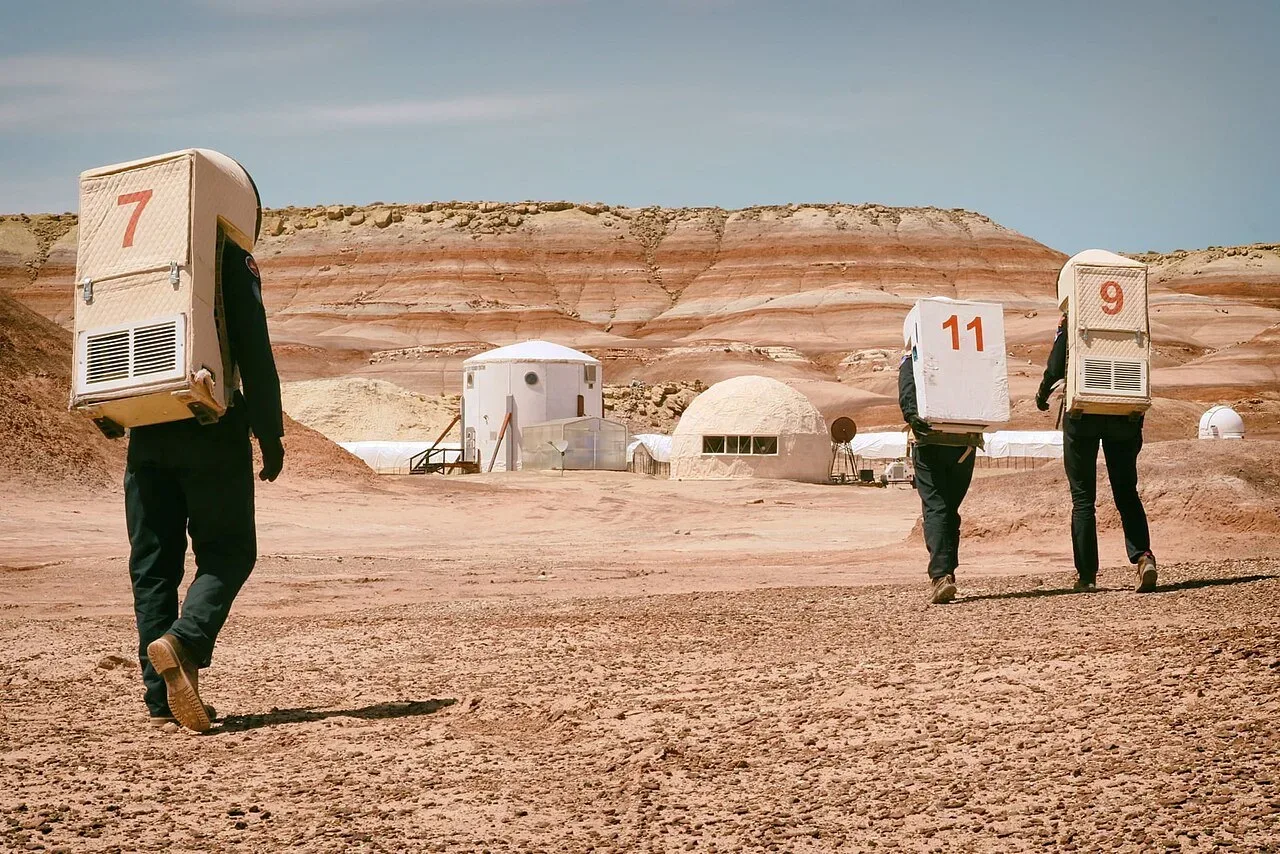
NASA's second CHAPEA crew left the Mars Dune Alpha habitat at Johnson Space Center in Houston on 31 October 2026 after 378 days. The four volunteers entered on 19 October 2025. NASA says their health and performance data will help plan Moon Base and future Mars missions.
Table of contents 6 sections
- Four volunteers left Mars Dune Alpha on 31 October 2026 after 378 days, having entered on 19 October 2025.
- The habitat offered about 1,700 square feet and simulated communication delays of up to 22 minutes each way.
- The crew was Ross Elder, Ellen Ellis, James Spicer and Matthew Montgomery.
- NASA will study health and performance under limited crew time, communication and food and water.
- Results have not been published yet, and NASA says the data will inform Moon Base and Mars planning.
The CHAPEA Mars simulation ended on 31 October 2026, when four volunteers left the Mars Dune Alpha habitat at NASA's Johnson Space Center in Houston after 378 days. NASA published the crew's reflections on 9 November and said the data will help plan how astronauts live and work on the Moon and on Mars.
The crew entered the habitat on 19 October 2025. The second mission of the Crew Health and Performance Exploration Analog, known as CHAPEA, ran longer than a year without anyone leaving the 1,700 square feet of living space.
Who was in the CHAPEA crew?
NASA named four volunteers. Ross Elder served as commander and test pilot, Ellen Ellis as medical officer, James Spicer as flight engineer and systems specialist, and Matthew Montgomery as science officer and versatile engineer.
They lived in a habitat built to resemble a Mars surface stay, and NASA says they faced communication delays of up to 22 minutes each way, the kind of lag a real Mars crew would have when talking to Earth. The first CHAPEA mission ended on 6 July 2024, so this was the second in the series.
What is the CHAPEA Mars simulation testing?
The project studies human health and performance under limited resources. NASA says researchers will compare risks that come from constraints on crew time, communication capacity and food and water systems.
That focus is deliberate. A crew on the surface of Mars cannot resupply quickly or call for help in real time, so the habitat tests how people and procedures cope with those limits over a long period. NASA also points out that many of the resource challenges that space explorers face also appear on Earth.
According to the ScienceDaily summary of the exit, the volunteers operated and tested essential systems, grew and cared for crops, conserved limited supplies and carried out simulated spacewalks. They also had to solve problems and make decisions with limited real-time guidance from mission control. The summary describes Mars as millions of miles away, which is the reason those delays and that independence matter.
What did the crew say about the experience?
NASA's article quotes all four. Elder said the real magic has been the privilege and pleasure of seeing everyone come together. Ellis said a future Mars crew requires a highly integrated ground team. Montgomery said it is the people who make exploration possible.
Crew members said teamwork, clear communication about equipment and data quality, and close coordination with the ground team were essential. Johnson Space Center Director Vanessa Wyche said the crew's work means more than completing a mission.
Sara Whiting, the CHAPEA project scientist, called this the now moment for the kind of data the crew produced. NASA's page does not release results yet. Analysis of health and performance measures is still ahead, and the agency has not published numbers on, for example, sleep, mood or task performance.
How does it connect to the Moon and Mars?
NASA says the crew's data will help plan how astronauts live and work at the planned Moon Base near the lunar south pole, as well as on future Mars missions. The robotic side of Mars exploration is covered in our Perseverance driving record report.
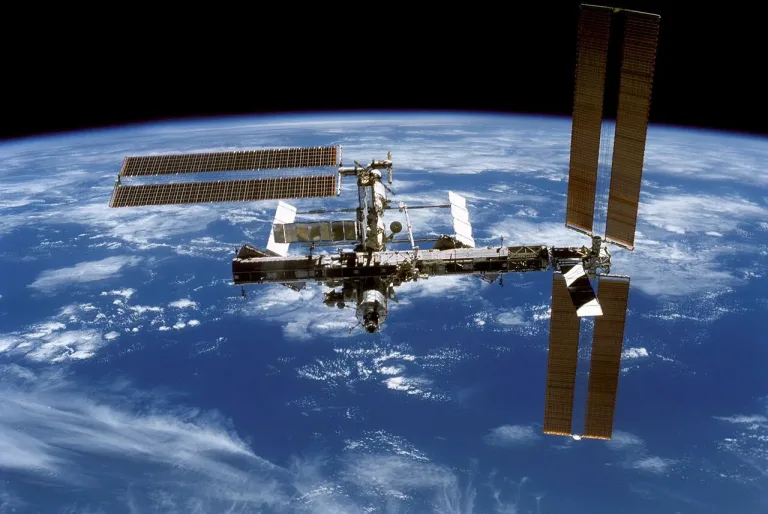
The habitat is a simulation, and it cannot reproduce everything. The crew had gravity and breathable air outside the walls in a way a Mars crew would not, and the stay overlapped with a real mission, a 237-day stay on the International Space Station by NASA astronaut Jack Hathaway. The comparison is useful for planning, but it is not a prediction of how any single astronaut will respond on Mars.
The scale of a real trip shows the gap. ScienceDaily's related coverage says the Crew-12 astronauts, who spent 237 days in space and splashed down on 8 October, travelled more than 100 million miles while orbiting Earth. The CHAPEA volunteers covered no distance at all, yet they spent more days in confinement than that orbital crew spent in flight. A two-way exchange at the full 22-minute delay would take up to 44 minutes, a figure that follows from NASA's number and is not a separate NASA claim.
What happens after the crew exits?
After the exit the crew went through about two weeks of post-mission evaluations and debriefs. Those sessions are where NASA gathers feedback from the crew while the experience is still recent, and the agency says the data feeds planning work.
NASA has not said when the first results will be published or how many more CHAPEA missions are planned.
What to watch next
Watch for the first published findings from Mission 2, for any announcement of a third CHAPEA crew, and for how the results feed into design choices for Moon Base habitats. NASA's full account is on the Johnson Space Center page, and a ScienceDaily summary covered the crew's exit on 10 November.
Frequently asked
- CHAPEA Mission 2 Crew Reflects After 378 Days on Simulated Mars — NASA Johnson Space Center
- NASA's CHAPEA Mars Crew Finally Emerges After More Than a Year in Isolation — ScienceDaily

0 comments
No comments yet — be the first.