No one has been chosen yet. Costa Rica's Rebeca Grynspan led the Security Council's seventh straw poll on 30 October 2026, ahead of Rafael Grossi, per preliminary reports. The winner needs nine Council votes, no veto and General Assembly approval before Guterres leaves on 31 December.
Table of contents 5 sections
- António Guterres's term ends on 31 December 2026 and the Security Council has not yet agreed on a successor.
- Rebeca Grynspan of Costa Rica led the seventh straw poll on 30 October, according to preliminary unofficial results.
- A winner needs at least nine Security Council votes, no veto from a permanent member and General Assembly approval.
- The UAE's Lana Nusseibeh entered the race on 21 October and placed fourth in her first poll.
- The UN has never had a female secretary-general, and several leading candidates are women.
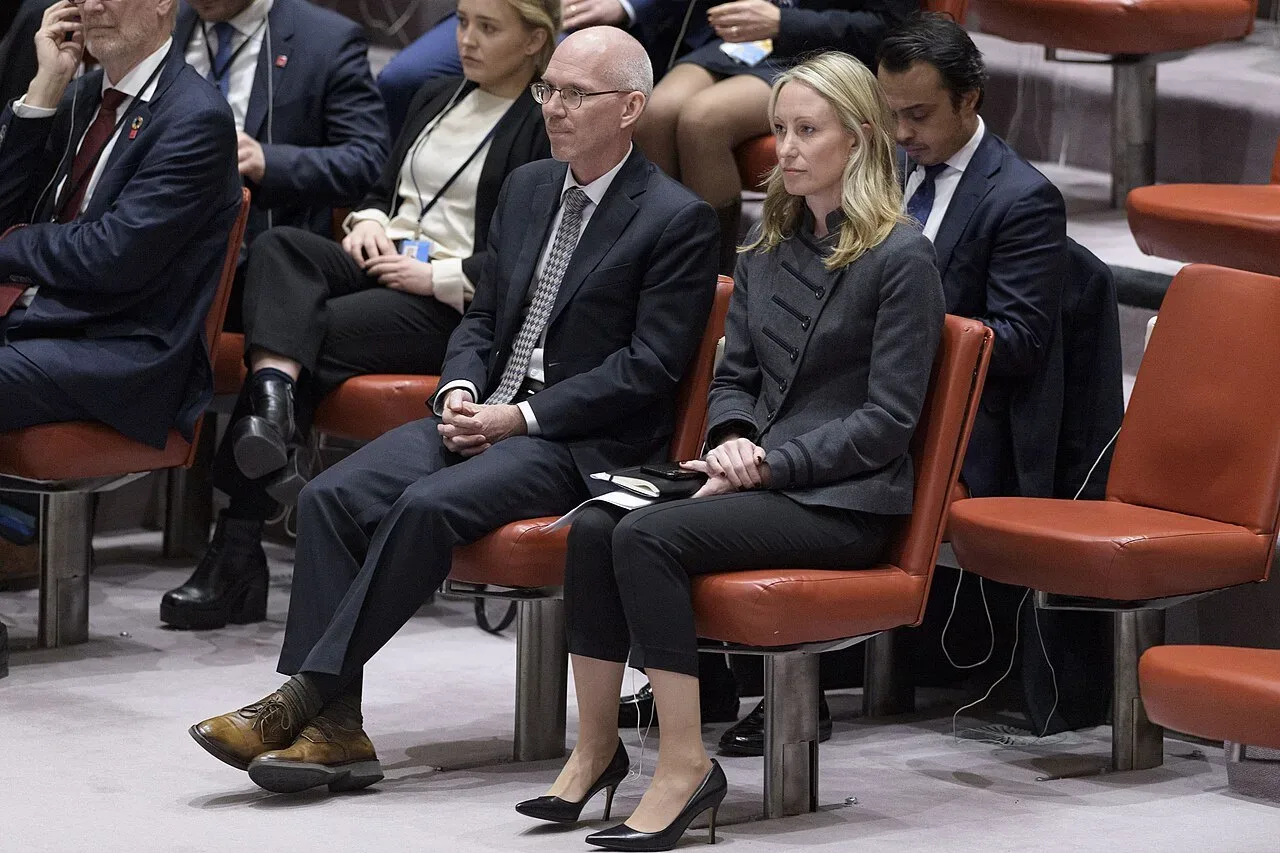
Costa Rica's Rebeca Grynspan led the Security Council's seventh straw poll on 30 October in the race to become the next UN secretary-general, with 11 votes to "encourage" and 4 to "discourage", according to preliminary, unofficial results reported by The National. The newest candidate, the United Arab Emirates' Lana Nusseibeh, came fourth on her first ballot with 7 encouraging and 6 discouraging votes.
No candidate has yet emerged as a consensus pick, and the clock is running. António Guterres's second term ends on 31 December 2026, and the UN, in its 81 years, has never been led by a woman. Several of the leading candidates would change that.
How the next UN secretary-general is chosen
The 15-member Security Council recommends a candidate and the 193-member General Assembly gives final approval. To be recommended, a candidate needs at least nine Council votes and no veto from any of the five permanent members, Britain, China, France, Russia and the United States, PassBlue explains.
Before the formal vote come straw polls: closed-door, anonymous ballots in which each Council member marks each candidate "encourage", "discourage" or "no opinion". Results are not officially published but routinely leak. From the sixth poll on 16 October, ballots from the permanent members were colour-coded, which shows candidates whether a "discourage" might be a veto. In that poll, Grynspan, Guyana's Carolyn Rodrigues-Birkett and Argentina's Rafael Grossi each drew two discouraging votes from permanent members.
There is also an unwritten norm of regional rotation, which this time favours a candidate from Latin America and the Caribbean.
Who is running?
Seven candidates were formally in the race by late October, according to the official nominations compiled on Wikipedia:
- Rebeca Grynspan (Costa Rica), head of UN Trade and Development, nominated by Costa Rica.
- Rafael Grossi (Argentina), head of the International Atomic Energy Agency, nominated by Argentina.
- Carolyn Rodrigues-Birkett (Guyana), nominated by Guyana.
- María Fernanda Espinosa (Ecuador), a former president of the General Assembly, nominated by Antigua and Barbuda.
- Ivonne Baki (Ecuador), nominated by Tonga.
- Olara Otunnu (Uganda), nominated by Uganda.
- Lana Nusseibeh (UAE), nominated by the UAE on 21 October.
Three candidates have dropped out: Chile's Michelle Bachelet in September, Argentina's Virginia Gamba in March and Senegal's Macky Sall in October.
The straw poll results so far
Grynspan has led most rounds. She topped the first poll on 30 July with 10 encouraging votes and the third on 18 September with nine, according to Reuters reports compiled on Wikipedia. Rodrigues-Birkett briefly took the lead in the second poll in August. Grossi has climbed in later rounds, reaching eight encouraging votes on 16 October and nine in the preliminary seventh-round count.
Public opinion has no formal role, but it points the same way. An informal PassBlue reader survey in August, with about 1,500 respondents, put Grynspan first with 32.0 percent, ahead of Espinosa at 23.4 percent and Bachelet at 21.9 percent. PassBlue stressed that the results would have no bearing on the official selection.
The preliminary figures for 30 October reported by The National were:
- Grynspan: 11 encourage, 4 discourage, 0 no opinion
- Grossi: 9 encourage, 4 discourage, 2 no opinion
- Rodrigues-Birkett: 8 encourage, 6 discourage, 1 no opinion
- Nusseibeh: 7 encourage, 6 discourage, 2 no opinion
Those numbers are leaked and unofficial, and they do not by themselves show whether any "discourage" came from a permanent member. Treat screenshots of tallies that circulate on social media with the same caution you would give a suspicious email; our guide on spotting phishing emails covers the habits that help.
Why Lana Nusseibeh's late entry matters
Nusseibeh, born in 1978, was the UAE's first female ambassador to the UN, from 2013 to 2024, and served on the Security Council in 2022 and 2023, PassBlue reported. She is minister of state at the UAE foreign ministry, on leave for the campaign. In her statement she said "The Charter gives the Secretary-General no army and no vote" and pledged to speak "frankly with every government and answering to none." A straw poll expected on 23 October was postponed to give the UAE time to submit her nomination, according to sources cited by PassBlue.
Her candidacy is contested. Yale researcher Nathaniel Raymond told PassBlue her election could be a "catastrophe" for UN work in Sudan and Yemen, citing a conflict of interest. Amnesty International reported in 2025 that weapons used by Sudan's RSF had been re-exported by the Emirates; the UAE denies supplying weapons to either side. Supporters, including former US official Brett McGurk, have called her "an inspired choice." As an Asia-Pacific candidate, she would also break the expected Latin American turn.
What to watch next
In 2016 the Council settled on Guterres after six straw polls, so the 2026 race is already running longer. Watch for three things: whether the next poll uses colour-coded ballots again, which most Council members reportedly wanted to drop while Bahrain, Russia and the US wanted to keep them; whether any front-runner's permanent-member opposition disappears; and whether more candidates withdraw to consolidate support.
The National's report on the seventh poll and PassBlue's coverage of the race are the closest thing to a running scoreboard. Whoever wins will inherit the wars in Iran, Sudan, Ukraine and Gaza on day one.


0 comments
No comments yet — be the first.