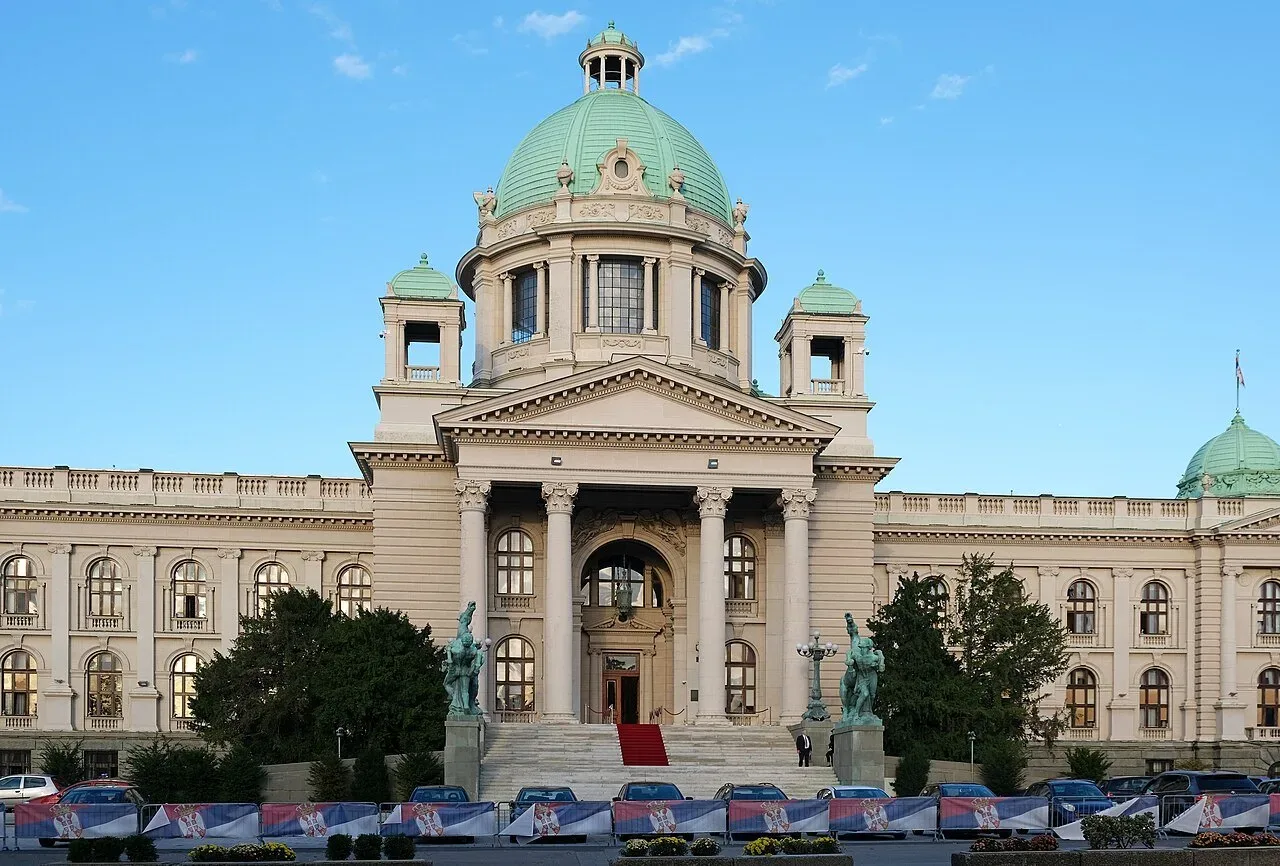
Serbia's Student List won the 25 October 2026 snap parliamentary election with 52.54 percent of the vote against 39.29 percent for Aleksandar Vučić's United Serbia, on partial results. It is projected to win 140 of 250 seats, a majority, and Vučić conceded on election night.
Table of contents 6 sections
- The Student List won Serbia's 25 October snap election with 52.54 percent on partial results.
- Turnout was 68.78 percent, the highest in more than 30 years.
- The Student List is projected to hold 140 of 250 seats, above the 126 needed to govern alone.
- Aleksandar Vučić conceded defeat, ending 14 years of Serbian Progressive Party rule.
- A presidential election must be held by 27 December after Vučić resigned as president in September.
Serbia's student-led opposition won the snap parliamentary election on Sunday 25 October, and Aleksandar Vučić conceded the same night. The Serbia election results from the Republic Election Commission give the Student List 52.54 percent against 39.29 percent for Vučić's United Serbia list, enough for the students to govern alone in the 250-seat National Assembly.
Those figures cover 8,077 of 8,392 polling stations and are not yet final, Al Jazeera reported. Turnout reached 68.78 percent, the highest in more than 30 years. The result ends the Serbian Progressive Party's 14-year hold on power.
How Vučić conceded
Vučić, who led the United Serbia list, spoke briefly on election night.
"Based on the stratified sample, it is clear that we have lost the election," Vučić said, according to Euronews.
He said the Student List would have between 135 and 140 seats and his side around 105, and put the vote at about 2.2 million for the students against 1.72 million for his party. For a politician who dominated Serbian public life for more than a decade, through organisation, media influence and a campaign built around himself, it was a fast and clear admission.
The projected seat count behind the Serbia election results
A majority needs 126 seats. Based on the partial count, the projected distribution is:
- Student List: 140 seats
- United Serbia (SNS-led): 103 seats
- Alliance of Vojvodina Hungarians: 3 seats
- Albanian political bloc: 2 seats
- Rasim Ljajić's list and the SDA Sandžak list: 1 seat each
The ethnic Albanian parties ran on a single list this time. Kosovo Prime Minister Albin Kurti called their two seats an "extraordinary achievement," according to Balkan Insight. In the outgoing parliament, Albanians from three southern Serbian municipalities had one representative.
Some smaller parties were still waiting to learn whether they had cleared the 3 percent threshold when the first counts came in. Euronews noted that this could nudge individual seat totals but would not change the winner or the overall outcome.
From a station canopy to a governing majority
The movement began after a railway station canopy collapsed in Novi Sad in 2024, killing 16 people. Nearly two years of youth-led protests followed and widened into a campaign against alleged corruption and the capture of state institutions. The Student List was never set up as a normal party. It turned street mobilisation into votes and, according to Euronews, drew support well beyond campuses, including from parts of the urban middle class.
Vučić resigned as president on 27 September and called the snap vote, Al Jazeera reported. Ana Brnabić, the speaker of the National Assembly, is acting president.
Euronews framed the vote as a referendum on Vučić's dominance and on the system built around him for more than a decade. Read that way, the margin matters as much as the win. A gap of more than 13 points on the highest turnout in three decades leaves little room for the losing side to argue the result away.
Who could become prime minister
The Student List did not name a candidate for prime minister during the campaign and stresses that it is a collective. Ilija Srdanović, a Novi Sad medicine professor and cardiologist who led the campaign, is seen as the most likely choice. It is unclear who will run the interior, finance and justice ministries, which is where the movement's promises on corruption and policing will be tested.
The timetable is set by the constitution. The new assembly must be constituted within 30 days of the final results, and a government formed within 90 days after that. Because the students can govern without partners, long coalition talks are unlikely. Separately, Brnabić must call an early presidential election, due no later than 27 December.
What it means for Serbia and the EU
European leaders and neighbouring states welcomed the result as a possible turning point for democracy, the rule of law and Serbia's hopes of joining the EU, Balkan Insight reported. Euronews expects pressure for change on judicial independence, public media and election conditions, and possibly on Belgrade's relations with Moscow and Beijing.
EU membership means adopting the bloc's whole body of law, which now includes newer rules on technology described in our EU AI Act explainer. That is a long road, and a new government with no ministerial experience will have to show it can run the state before Brussels offers much.
What to watch next
- The Republic Election Commission's final count and whether any seat totals shift.
- The Student List's choice of prime minister and its first ministerial picks.
- The date of the presidential election, due by 27 December, and whether Vučić or a close ally runs.
- How the SNS rebuilds in opposition after losing its grip on power.
- The wider region: Bulgaria holds a presidential runoff on 1 November between acting President Iliana Iotova and former interim prime minister Andrey Gyurov, Balkan Insight reported.
0 comments
No comments yet — be the first.