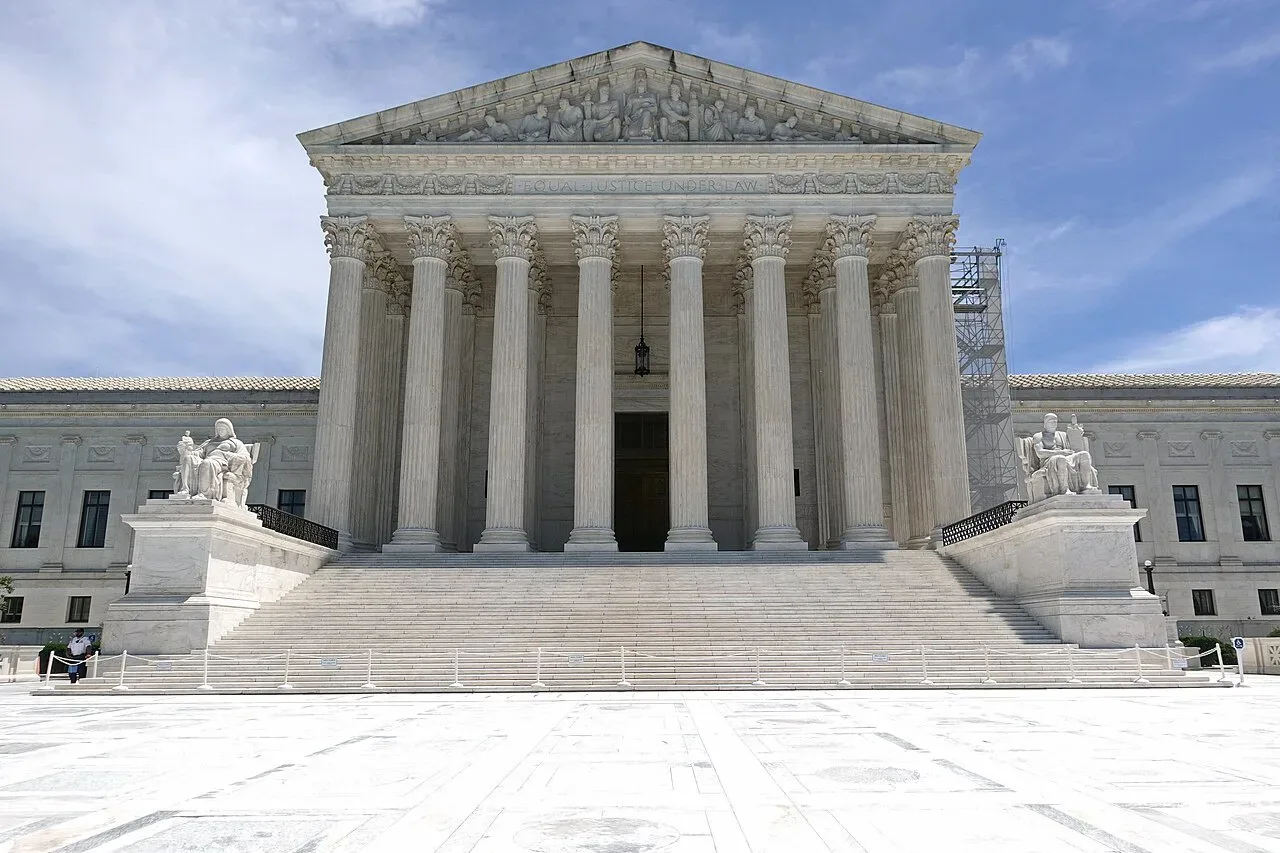
New Jersey has asked the US Supreme Court, in Flaherty v. KalshiEX (No. 26-299), to decide whether Kalshi's sports event contracts are federally regulated swaps or state-regulated gambling. Appeals courts are split. The court has not agreed to hear the case, and Kalshi's response is now due on 7 December 2026.
Table of contents 6 sections
- New Jersey petitioned the Supreme Court on 2 September 2026 after the Third Circuit ruled for Kalshi on 6 April.
- The Ninth and Sixth Circuits have sided with states, creating a split only the Supreme Court can resolve.
- Thirty-nine states, the District of Columbia, the NFL and 145 tribes filed briefs backing New Jersey.
- The court extended Kalshi's response deadline to 7 December on 30 October.
- The NFL says $1.8 billion of $3.3 billion traded on the season's first Sunday involved football contracts.
The Kalshi Supreme Court fight just got longer. On Friday 30 October the justices gave Kalshi until 7 December to answer New Jersey's request that they decide whether sports event contracts are federally regulated financial products or state-regulated gambling. It is the second extension Kalshi has received in a case that 39 states, the District of Columbia and the National Football League have urged the court to take up.
The case is No. 26-299, Flaherty v. KalshiEX, named for the interim director of New Jersey's Division of Gaming Enforcement. The court has not agreed to hear it yet. What it decides will shape how Americans can trade on games, elections and other events on platforms such as Kalshi and Polymarket.
What the Kalshi Supreme Court case is about
Kalshi is registered with the Commodity Futures Trading Commission as a designated contract market. It argues that its event contracts, including ones on sports results, are swaps under the Commodity Exchange Act, and that federal law gives the CFTC exclusive authority over them. If that is right, state gambling laws, licensing and age limits do not apply.
New Jersey says the opposite: a contract that pays out on who wins a football game is a sports bet, and states have always regulated sports betting. On 6 April 2026 the US Court of Appeals for the Third Circuit sided with Kalshi, holding that federal law preempts New Jersey's restrictions. New Jersey filed its petition on 2 September.
Why the Supreme Court is likely to be asked to settle it
Other appeals courts have gone the other way. The Ninth Circuit sided with Nevada regulators, and the Sixth Circuit ruled against Kalshi in litigation involving Ohio and Tennessee, according to Newsweek. A Maryland case is waiting for a ruling in the Fourth Circuit, and Maryland has also sent cease-and-desist letters to Kalshi, Crypto.com and Robinhood.
When federal appeals courts disagree on the same question of federal law, the Supreme Court is the only body that can resolve it. That split is New Jersey's strongest argument for review, and it is why so many outside groups have weighed in at this early stage.
Who filed briefs and what they argue
The docket lists eleven friend-of-the-court briefs backing New Jersey's petition, filed between 22 September and 8 October. They include:
- A coalition of 39 states and the District of Columbia, led by Ohio, which says courts are "hopelessly confused and divided" on the issue.
- The National Football League.
- The American Gaming Association and the Casino Association of New Jersey.
- 145 Indian tribes, the Cabazon Band of Cahuilla Indians and the National Council of Legislators from Gaming States.
- Former CFTC chairman Gary Gensler and former Senator Christopher Dodd.
The states argue that licensing, exclusion lists, minimum ages and spending limits exist to address gambling harms, and that prediction markets should not avoid them by labelling sports wagers as financial contracts.
What the NFL wants, and the numbers behind it
The league says it does not want prediction markets shut down. It wants state regulators to police sports contracts, a minimum trading age of 21 instead of the 18 Kalshi allows, and stronger protection against contracts on events an insider could influence or know in advance, such as a missed field goal, a player injury or an officiating call.
"In the end, we believe that given the current resource constraints of the CFTC, this is a job better left to the states," the NFL told CNBC, as quoted by Newsweek.
The league's own figures show why it cares. It said $1.8 billion of the $3.3 billion traded on prediction markets on the first Sunday of the NFL season involved football contracts, about 55 percent of the day's volume.
The industry's case
Prediction-market companies say one federal framework is more consistent than dozens of state regimes. A spokesperson for the Coalition for Prediction Markets told the AP that the CFTC is actively overseeing sports markets and that forthcoming federal rules should address the NFL's concerns. Polymarket says it supports integrity protections but prefers a harmonised federal system to a patchwork of state rules. Kalshi had not been quoted directly in the coverage reviewed for this article.
If you do trade on any of these platforms, treat the account like a brokerage account: our explainer on how passkeys work covers one of the stronger ways to protect a login.
What happens next
Kalshi first won an extension from 8 October to 9 November, granted on 22 September. It asked for more time again on 29 October, and the court granted the move to 7 December the next day. The justices cannot sensibly consider the petition until Kalshi responds, so a decision on whether to hear the case is unlikely before December at the earliest.
Watch for three things: Kalshi's response and whether it argues the split is less deep than New Jersey claims, the Fourth Circuit's ruling in Maryland, and any new CFTC rules on sports contracts that could change the legal ground under the case.
Frequently asked
- Docket No. 26-299, Flaherty v. KalshiEX, LLC — Supreme Court of the United States
- Map Shows 40 States Backing NFL's Supreme Court Prediction Market Fight — Newsweek



0 comments
No comments yet — be the first.