NASA is asking industry to design, build and test Lunar Reactor-1, a fission reactor that would give the Moon 20 kilowatts of electricity, about what 16 average American homes use in a year. NASA wants it launch-ready by 2030 and running for at least five years. Proposals are due 21 December.
Table of contents 6 sections
- NASA issued a request for proposals on 23 November for Lunar Reactor-1, a 20-kilowatt fission power system for the Moon.
- The agency wants the reactor ready to launch by 2030 and to operate for at least five years after deployment.
- A reactor can run through the roughly 14-day lunar night, when solar panels produce nothing.
- Proposals are due 21 December, and NASA has not yet chosen any company or published a cost.
- Draft documents from August suggest a mass limit under 15 metric tons, but those figures are not confirmed as final.
NASA put out a call on 23 November for companies to design, build and test a Moon nuclear reactor, a fission power system called Lunar Reactor-1, or LR-1. The agency wants it to deliver 20 kilowatts of electricity, be ready to launch by 2030 and keep running for at least five years once it is on the surface.
The call is a formal request for proposals titled Space Power and Reactor Capabilities. NASA says it incorporates feedback from a draft released in August and an industry day held in September at the Ohio Aerospace Institute in Cleveland. Proposals are due on 21 December.
What does NASA want the Moon nuclear reactor to do?
The target is 20 kilowatts of electrical power. NASA compares that to the yearly electricity use of about 16 average American households, which is small by grid standards but large for a spacecraft. The agency says the power would support its Moon Base plans: habitats, communications, rovers, scientific instruments and other infrastructure.
The reactor has to meet Department of Energy safety standards for nuclear operations. LR-1 is managed by NASA's Space Reactors Division in partnership with the DOE, and the companies that win work would be the ones building and testing it.
NASA says the main goal of this solicitation is to advance LR-1's technology, testing and flight design. It also leaves room to issue further task orders for other space nuclear power systems later.
Why use a reactor instead of solar panels?
The Moon's night lasts about 14 Earth days. Solar panels go dark for that stretch, so a lunar base that relied only on sunlight would need huge batteries or would have to shut most systems down. A reactor keeps producing power through the dark. NASA also points out that dust storms on Mars can block sunlight for months and that solar power becomes less useful the farther you travel from the Sun.
Brian Giblin, NASA's LR-1 program manager, put the case in the agency's release: "A reliable source of safe and abundant energy will be vital to future exploration of the lunar and Martian surface." He added that the request "represents an important step forward as NASA partners with industry to establish an enduring human presence on the lunar surface."
What did the earlier documents say about LR-1?
The August draft gives more engineering detail than the final announcement. An analysis of that draft by the New Space Economy site reports draft requirements of at least 20 kilowatts at the user connection, five years of continuous full-power operation without maintenance, and operation at 84 to 90 degrees south latitude. It also lists a mass limit of under 15 metric tons and a darkness endurance of at least 354 hours.
The draft also shows how NASA plans to pick winners. Mission Suitability is worth 1,000 points, and the LR-1 task order accounts for 700 of them, or 70 percent of that score. The analysis says NASA rates Mission Suitability and past performance as significantly more important than cost.
Those are draft numbers, and the final requirements could differ. NASA's 23 November announcement does not repeat them, so treat them as context and not as the final specification.
The same analysis notes that earlier NASA material described systems at 10 kilowatts and at a 40-kilowatt class, which shows how the target has moved as the program matured. It also reports that NASA and the DOE agreed in January 2026 to ready a lunar surface reactor for launch by 2030.
How does this fit with the rest of NASA's plans?
LR-1 is one piece of a wider push. NASA's release says the same division manages Space Reactor-1 Freedom, scheduled to launch in 2028. That mission is meant to deliver three SkyFall helicopters to Mars and to demonstrate nuclear electric propulsion.
The reactor also needs a destination. For where NASA stands on putting astronauts back on the surface, see our report on the accelerated Artemis landing plan.
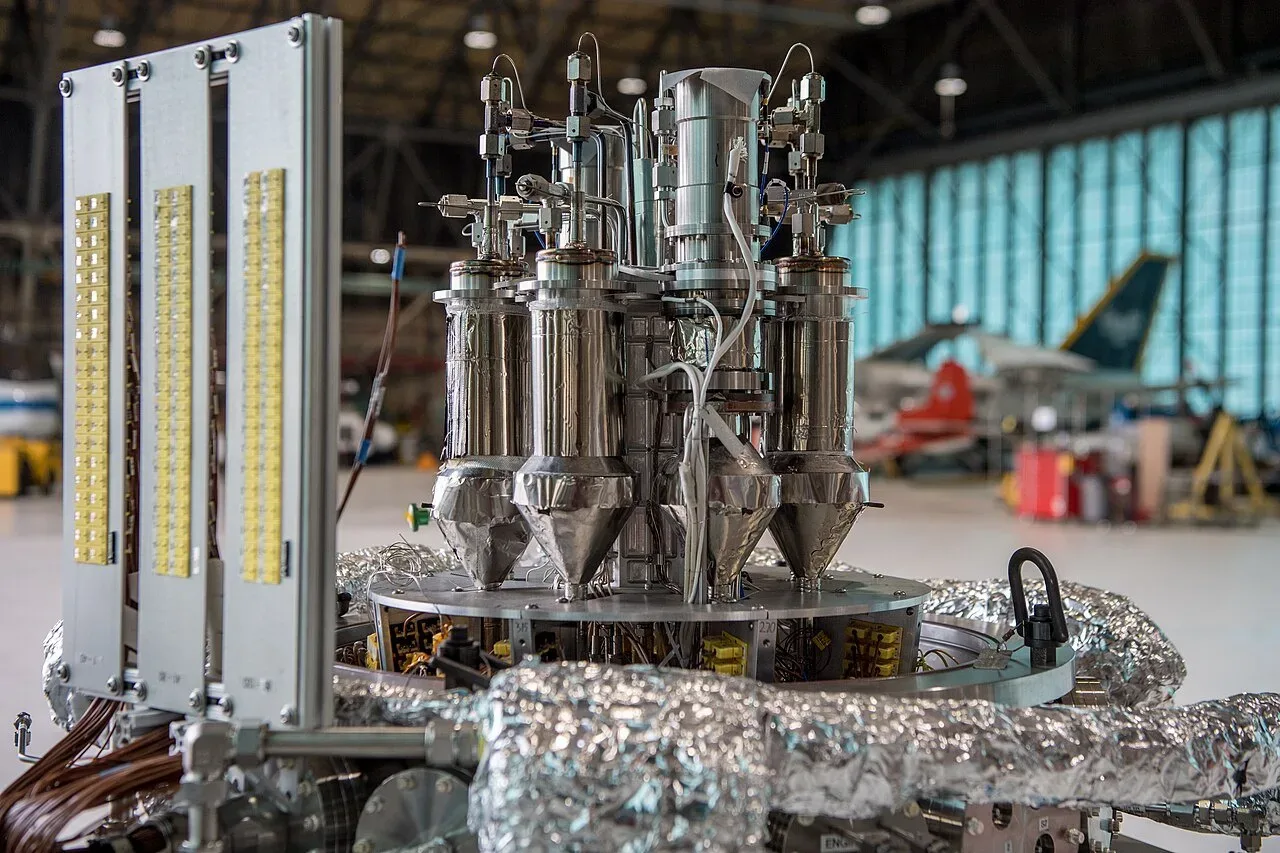
For a sense of the hardware lineage, NASA Glenn built a prototype 1-kilowatt Kilopower reactor for use in space and on planet surfaces, which is the machine shown in the photograph with this article. LR-1 is a much larger step, twenty times the output of that prototype.
What could go wrong before 2030?
A request for proposals is not a contract. NASA has not named a winner, and the analysis of the August draft says NASA may make zero, one or several awards. LR-1 has not been built, tested, launched or deployed.
The 2030 date is a target. Building a flight unit, clearing nuclear safety reviews, getting launch authorization, landing it and switching it on all have to fit into roughly four years. The analysis also flags fuel supply as a worry: it cites an August 2026 report from the Government Accountability Office finding that projected supply of high-assay low-enriched uranium may not meet near-term demand. The draft calls for that type of fuel.
Cost is the other unknown. The NASA announcement does not give a price or a budget for LR-1, so any dollar figure you see elsewhere did not come from the agency's release.
What to watch next
The first date is 21 December, when proposals close. After that, watch for whether NASA announces how many companies it selects and whether it publishes the final technical requirements. The second is the 2028 launch of Space Reactor-1 Freedom, which NASA says will demonstrate nuclear electric propulsion. The details are in NASA's own announcement.

0 comments
No comments yet — be the first.