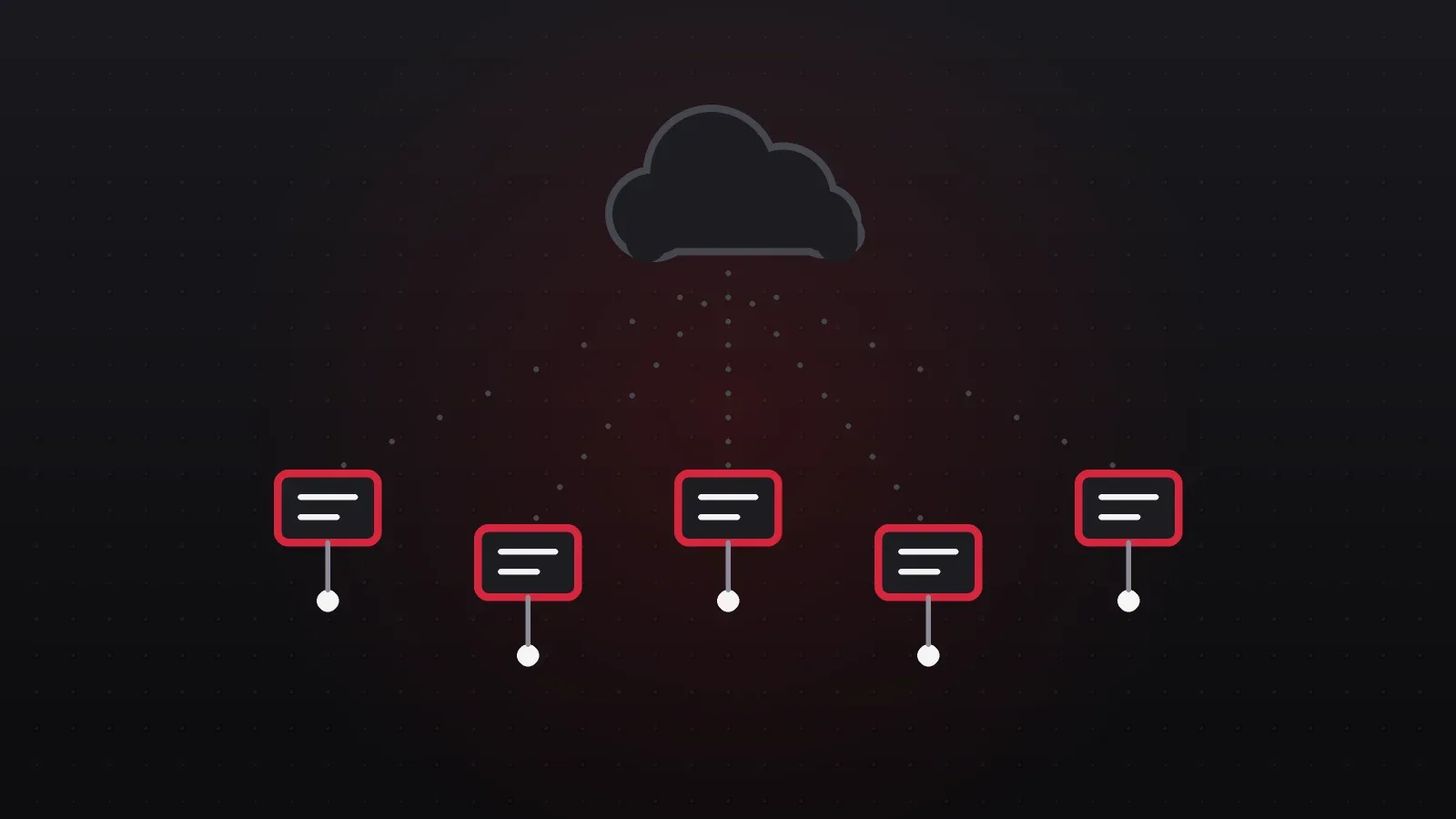
Edge computing processes data close to where it is created, on the device or a nearby server, instead of sending everything to a distant cloud data centre. This cuts delay, reduces the data sent over long links and lets systems keep working when the connection drops.
Table of contents 8 sections
- Edge computing processes data on or near the device that produces it instead of in a distant cloud data centre.
- Distance sets a floor on delay, since light in fibre covers about 1,000 kilometres in roughly 5 milliseconds.
- The main gains are lower latency, less data sent over long links, offline operation and better control over where data is processed.
- Cloud and edge work together, with the cloud used for training and storage and the edge for immediate decisions.
- Edge sites are harder to update and secure, so plan management and device security before deployment.
Edge computing means processing data close to where it is created, on the device itself, on a gateway in the building or on a server at a nearby network site, instead of sending everything to a distant cloud data centre. The payoff is faster responses, less data crossing long links and the ability to keep working when the connection drops.
What counts as the edge?
There is no single place called the edge. It is a range of locations between the device and the cloud, and where a workload sits along that range depends on how quickly it must respond.
- Device edge: the processing happens on the sensor, camera, phone or vehicle itself. A smart speaker listening for its wake word is a familiar case.
- Local edge: a gateway or small server in the same building, such as a factory floor, a shop or a hospital.
- Network edge: servers inside a telecom operator's network, close to base stations and users.
- Regional edge: content delivery networks, which keep cached copies of websites and video in many cities, are an early and widely used form.
Standards bodies use their own terms. ETSI's Multi-access Edge Computing group describes cloud-computing capabilities at the edge of the network, characterised by ultra-low latency and high bandwidth. NIST's 2018 conceptual model calls a similar idea fog computing. The Linux Foundation hosts LF Edge, an umbrella organisation for open, interoperable edge frameworks.
Why is edge computing faster?
Distance sets a floor on delay. Light in optical fibre travels at roughly two-thirds of its speed in a vacuum, which works out to about 5 milliseconds each way for every 1,000 kilometres. A data centre 1,000 kilometres away therefore costs at least 10 milliseconds per round trip before any routing, queuing or processing begins.
For a web page, that barely matters. For a machine that must react in real time, such as a robot arm on a production line, a safety shutdown or a vehicle avoiding a hazard, it can decide whether the system works at all. Running the decision loop locally removes the long trip.
What problems does edge computing solve?
An IRTF document, RFC 9556, lists the requirements that centralised cloud systems struggle to meet in Internet of Things deployments: time sensitivity, data volume, connectivity cost, operation with intermittent services, privacy and security. Each maps to a practical gain.
- Lower latency: responses come from a nearby machine instead of a distant one.
- Less data to move: a gateway that condenses 20 raw readings into one summary message sends 95 percent fewer messages upstream.
- Resilience: a site can keep operating while the internet link is down and catch up afterwards.
- Privacy control: raw video or audio can be analysed locally, with only the results leaving the site, which helps where rules limit where data may travel.
Where is edge computing used?
Factories use cameras and local servers to inspect parts on the line and reject defects without waiting for a cloud reply. Shops keep tills and stock systems running through an internet outage. Phones and cars run AI models on the device, so features work without a connection and personal data stays put. Content delivery networks serve cached video from a city near the viewer.
Telecom operators are a growing source of edge capacity too. They place servers close to base stations so that mobile applications travel a shorter path. How the radio side improves is covered in our comparison of 5G vs 4G.
Edge computing vs cloud computing: which wins?
Neither. The cloud offers elastic capacity, easy central management and the heavy computing needed to train large AI models. The edge offers immediate decisions, local filtering and operation without a connection.
A common pattern is to train a model in the cloud, push it to devices that run it locally, and send back only summaries and exceptions. Choosing the edge is a decision about where each step of the work should happen, not a decision to leave the cloud.
How does edge computing relate to AI?
Training a large model takes the clustered hardware of a data centre, but using a trained model, known as inference, often needs far less. That is why inference increasingly runs on phones, laptops, cameras and local servers, while training stays in the cloud. Local inference keeps response times short and keeps the raw input, such as a photo or a voice recording, on the device.
The trade-off is size. A model must fit the memory and power budget of the device, so smaller or compressed models are used at the edge. For background on how the larger models are built, see our explainer on how large language models work.
What are the drawbacks of edge computing?
- Management at scale: hundreds of small sites need remote updates, monitoring and spare parts. Orchestration tools such as Kubernetes have lightweight versions for small hardware, which helps keep sites consistent.
- Physical exposure: devices in shops, streets and cabinets can be stolen or tampered with. Treating every device and request as untrusted until verified, the idea behind zero trust security, fits this setting well.
- Limited hardware: local machines have less processing power and storage, so models and software must be smaller.
- Duplicated cost: buying and maintaining equipment at many sites can cost more than renting capacity in one place.
How to decide whether you need edge computing
- Write down the response time the application truly needs. If hundreds of milliseconds are acceptable, the cloud is usually enough.
- Compare the data your sensors produce with what the network can carry affordably. If the data exceeds the link, process locally and send summaries.
- Ask what must happen when the connection fails. If work has to continue, you need local processing.
- Check legal or contractual limits on where data may be processed.
- Start with one site, plan remote updates, monitoring and device security from the beginning, and consider a managed edge or content delivery service before building your own.
Frequently asked
- Multi-access Edge Computing (MEC) — ETSI
- Fog Computing Conceptual Model (NIST SP 500-325) — National Institute of Standards and Technology
- RFC 9556: Internet of Things (IoT) Edge Challenges and Functions — Internet Research Task Force
- LF Edge — Linux Foundation
0 comments
No comments yet — be the first.