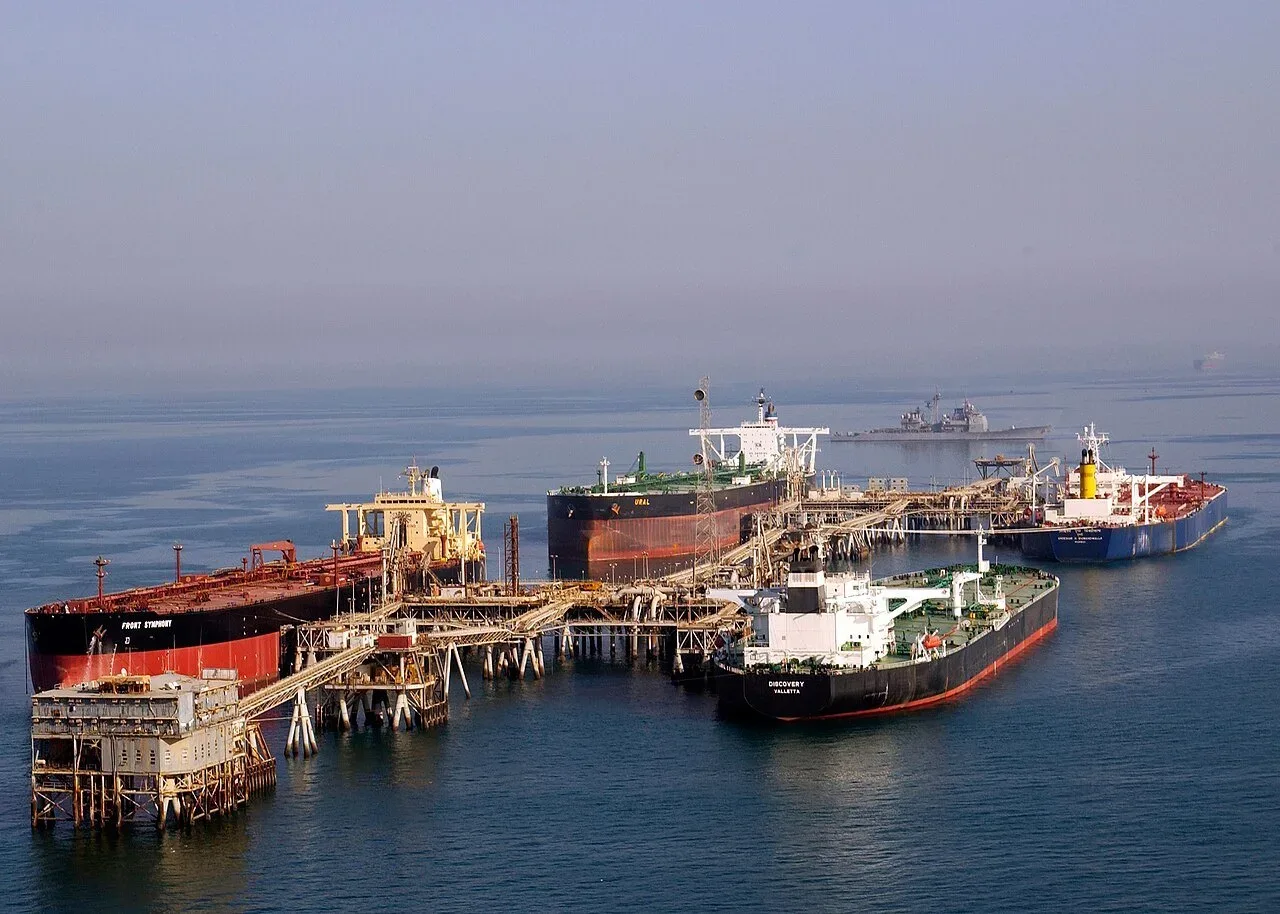
Strait of Hormuz attacks in October 2026 included Iran's claim that seven tankers were struck on 22 October and a 29 October explosive attack on a tanker off Oman. The US says 95 percent of ships still pass, but Brent crude reached $117 a barrel on 30 October amid fears of escalation.
Table of contents 5 sections
- Iran's Revolutionary Guard said seven tankers were struck in the Strait of Hormuz on 22 October, the largest single-day toll of the war.
- On 29 October a small boat attached explosives to a tanker off Khasab, Oman, causing a fire that was extinguished without casualties.
- US Central Command disputes Iran's mine claims and says 95 percent of vessels still get through the strait.
- Brent crude hit $117 a barrel on 30 October, compared with about $72 before the war began on 28 February.
- Markets fear a further escalation after the US midterm elections on 3 November.
Brent crude touched $117 a barrel in Asian trading on 30 October after a tanker caught fire in the Strait of Hormuz, the latest in a run of Strait of Hormuz attacks that has put shipping under near-constant threat since the US-Israeli war on Iran began. A small boat came alongside the outbound tanker and attached two explosive devices above the waterline, according to the UK Maritime Trade Operations centre, UKMTO, as reported by Oilprice.com.
The crew survived and the fire was put out. But the method, limpet-style charges placed by hand, shows how varied the threats in the waterway have become: mines, missiles, drones and now boarding-range attacks.
What happened in the Strait of Hormuz attacks this month
The most dramatic claim came on 22 October. Iran's Islamic Revolutionary Guard Corps said seven oil tankers had been struck and damaged in a single day, the largest one-day toll since the war began on 28 February, Al Jazeera reported. Four were hit while transferring oil and caught fire overnight; three were disabled after hitting mines, according to the IRGC. None of that could be independently verified, and the IRGC gave no casualty figures or flags.
A week later the pattern repeated. The IRGC said four tankers struck mines on 29 October, and UKMTO received reports that an outbound tanker was burning 25 nautical miles north-east of Khasab, Oman. UKMTO later said there was "a verified report confirming the crew is safe" and no environmental impact.
Earlier in the month, the attacks were near-daily. Al Jazeera, citing a shipping intelligence service, reported at least seven tanker incidents in the first week of October alone, including a strike on the Kuwaiti-flagged supertanker Kazimah III on 1 October and an unknown projectile that injured 12 crew on a Panama-flagged tanker, according to India's foreign ministry.
Two stories about the same waterway
The striking thing about this crisis is how differently each side describes it.
- Iran's version: Tehran claims control of the strait and attacks ships that try to pass without its authorisation, Al Jazeera reported. The IRGC has warned that if Washington helps tankers use other routes, "the conflict will extend to its bases in the region."
- The US version: A US Central Command spokesperson called Iran's mine claims incorrect, said US forces had cleared the international shipping lanes, and said Iran was using missiles and drones instead. CENTCOM says the strait remains open, with 95 percent of vessels getting through, a figure that has not been independently checked.
- The White House version: President Donald Trump said "Iran is doing everything they can to drive up the price of oil prior to the US Midterm Election" and accused Tehran of "making up fake hits, mines, and everything else."
Both things can be partly true. Oil can still move in large volumes while each successful attack raises insurance, freight and fear. The market's reaction suggests traders believe the risk is real whatever the exact count of hits.
Why the strait matters so much for oil
Before the war, about 125 large commercial vessels crossed the strait every day, carrying about 20 percent of the world's crude and liquefied natural gas supplies, according to figures cited by Al Jazeera. Brent was around $72 a barrel before the conflict, Tamas Varga of PVM Oil Associates said. It was already at $99.57 on 6 October, according to Oilprice.com data cited by Al Jazeera, before the late-month jump.
The Gulf has adapted more than many expected. Ship-tracking firm Kpler estimated that about 40 percent of oil exports now bypass the strait through pipelines and other routes, and that Gulf flows excluding Iran recovered to more than 81 percent of pre-war levels in September. Saudi Aramco chief executive Amin Nasser nonetheless said nearly three billion barrels of supply had been lost since late February and that rebuilding inventories could take up to two years. G7 members said they would release up to 100 million barrels from strategic reserves.
The bottleneck has shifted from oil to ships. "Ships don't get built overnight," IG Group analyst Chris Beauchamp told Al Jazeera, describing a shuttle system in the Gulf that keeps oil moving but needs far more tankers than usual.
Is the Strait of Hormuz open?
Technically yes, practically only partly. Ships are crossing, many under US escort, but every crossing carries a risk of mines or attack, and Iran says unauthorised vessels are legitimate targets. Fighting on Iran's other flank adds pressure: Houthi attacks on Saudi airports and oil sites, which Oilprice.com cited as another reason for the price rise, keep the whole region on edge.
For consumers far from the Gulf, the effect arrives at the pump and in power bills. Energy-hungry sectors feel it first; our explainer on data centre energy demand shows how much electricity some industries now need, which is why fuel shocks travel so quickly through economies.
What to watch after the US midterms
The date traders keep circling is 3 November. Markets fear an escalation once the US midterm elections are over, Oilprice.com reported, and Al Jazeera's correspondent in Tehran said Iran expects a US attack before or around that time, with the IRGC's army chief claiming Iran is more ready than ever.
Three signals will tell you where prices go next: whether the IRGC follows through on threats against US bases, whether CENTCOM's escort numbers rise or fall, and whether any ceasefire talk emerges after the vote. For the underlying data, the Al Jazeera report on the seven tankers and Oilprice.com's market report are good places to start. If you are budgeting for winter fuel, plan on volatility rather than relief.


0 comments
No comments yet — be the first.