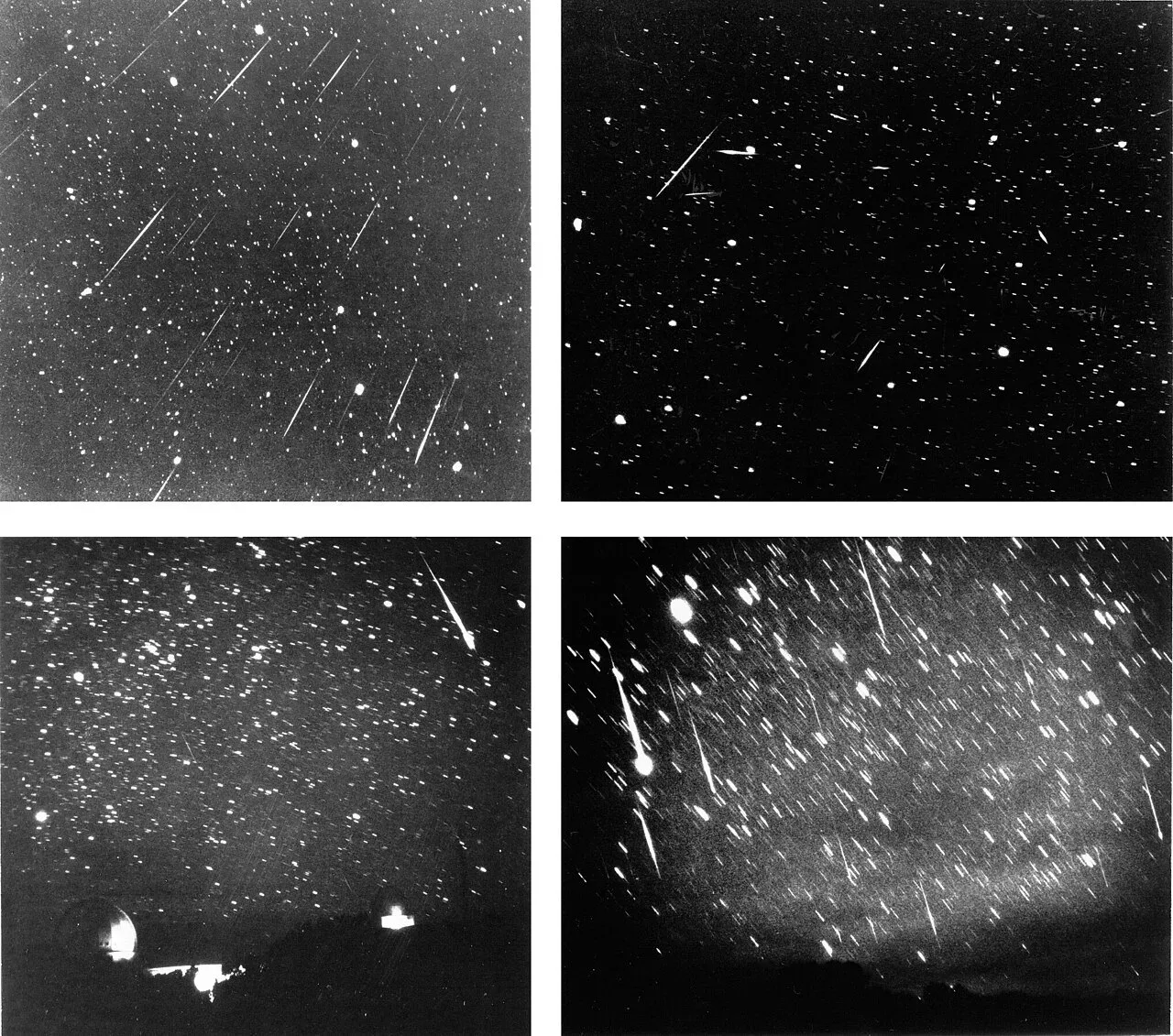
In the November 2026 night sky, the Leonid meteor shower peaks around 0:00 UTC on 18 November, with about 10 to 15 meteors an hour under dark skies after midnight. The Taurids peak on 4 to 5 November, the Beaver supermoon is full on 24 November, and Uranus reaches opposition on 25 November.
Table of contents 6 sections
- The Leonids are predicted to peak at about 0 UTC on 18 November 2026, so watch after midnight on 17 to 18 November.
- Expect roughly 10 to 15 meteors an hour under dark skies; no Leonid storm is forecast this year.
- A half-lit first quarter Moon sets around 11 p.m., leaving the best hours dark.
- The 24 November Beaver Moon is a supermoon about 6.5 percent larger and 13.5 percent brighter than average.
- Uranus reaches opposition on 25 November and the Taurids peak on 4 to 5 November.
The best show in the November 2026 night sky is the Leonid meteor shower, which the American Meteor Society expects to peak at about 0:00 UTC on 18 November, so the night of 17 into 18 November is the one to circle. A week later, on 24 November, the full Beaver Moon arrives as a supermoon, the first since January.
NASA's list of the year's notable events also puts the Taurid meteor shower on 4 and 5 November and Uranus at opposition on 25 November. None of this needs a telescope except Uranus, and even that is a binocular target from a dark site.
When do the Leonids peak in 2026?
According to EarthSky's Leonid guide, which cites the American Meteor Society, the predicted peak is 0 UTC on 18 November. Translate that to your time zone, but do not worry too much about the exact hour: the shower is active from early November into early December, and rates build through the night.
The useful rule is to watch after midnight. The radiant, the point in the constellation Leo from which the meteors appear to come, rises around midnight and climbs highest just before dawn. The pre-dawn hours of 18 November are the prime window, and the morning of 17 November is worth a look if the weather forecast looks better then.
How many meteors will you see, and will the Moon spoil it?
Keep expectations modest. EarthSky says that under a dark, moonless sky the Leonids typically produce about 10 to 15 meteors an hour, and Star Walk puts the expected 2026 rate at about 15 an hour under dark skies. Scientists do not expect a meteor storm this year.
The Moon is less of a problem than it could be. It reaches first quarter at 11:48 UTC on 17 November, so it is about half lit; Star Walk puts it at roughly 53 percent illuminated at the peak and says it sets around 11 p.m. That leaves the hours after midnight, exactly when the radiant is up, dark enough for faint meteors.
Leonids are fast. Star Walk gives their speed as about 71 kilometres per second, and the brightest ones can leave glowing trails that linger for minutes. EarthSky also notes that Jupiter and Mars sit near the radiant, closest to each other around 16 November, which gives you an easy landmark.
Why the Leonids have a reputation for storms
The meteors are debris from comet 55P/Tempel-Tuttle, which circles the Sun about every 33 years. When Earth passes through a dense, fresh trail of that debris, rates can explode. In 1833 witnesses reported more than 100,000 meteors an hour. In 1966, observers in the south-western United States saw 40 to 50 meteors per second for about 15 minutes. The 2001 return also produced thousands an hour over North America.
2026 is not one of those years. The comet is due back in early 2031, so the next serious storm talk will start around then.
The Beaver supermoon on 24 November
The November full Moon peaks at 14:53 GMT on 24 November, and it will look full from roughly 23 to 25 November. Star Walk calculates its distance at about 360,768 kilometres and says it will appear 6.5% larger and 13.5% brighter than an average full Moon. It will sit in Taurus, less than one degree from the Pleiades star cluster.
Be honest with yourself about the size difference: it is hard to notice by eye. The best way to enjoy a supermoon is to catch it rising near the horizon, where buildings and trees give it scale. Another supermoon follows on 24 December, the last of 2026.
Taurids and Uranus: the quieter events
The Taurids, listed by NASA for 4 to 5 November, are the first meteor shower of the November 2026 night sky. They are a quieter shower than the Leonids, though EarthSky keeps a separate guide to the bright Taurid fireballs some observers report. Do not plan a whole night around them, but if you are outside early in the month, keep an eye out.
Uranus reaches opposition on 25 November, meaning it sits opposite the Sun in our sky and is up all night at its closest and brightest for the year. You will need binoculars or a small telescope and a star chart or app to pick it out.
How to watch the November 2026 night sky
- Get away from city lights. Light pollution erases most faint meteors.
- Give your eyes time to adjust to the dark, and avoid looking at your phone screen.
- Lie back and take in as much sky as possible. You do not need to stare at Leo; meteors farther from the radiant have longer trails.
- Dress for a cold night. November watching means sitting still for an hour or more.
- If you want photos, use a tripod and long exposures, and bring a charged battery pack; our guide to USB-C chargers and cables explains what will refill a phone or camera quickly.
For most people the November 2026 night sky comes down to one date. Check the forecast on the afternoon of 17 November. If skies are clear, plan to be outside between midnight and the first light of dawn on 18 November, and give it at least an hour.

0 comments
No comments yet — be the first.