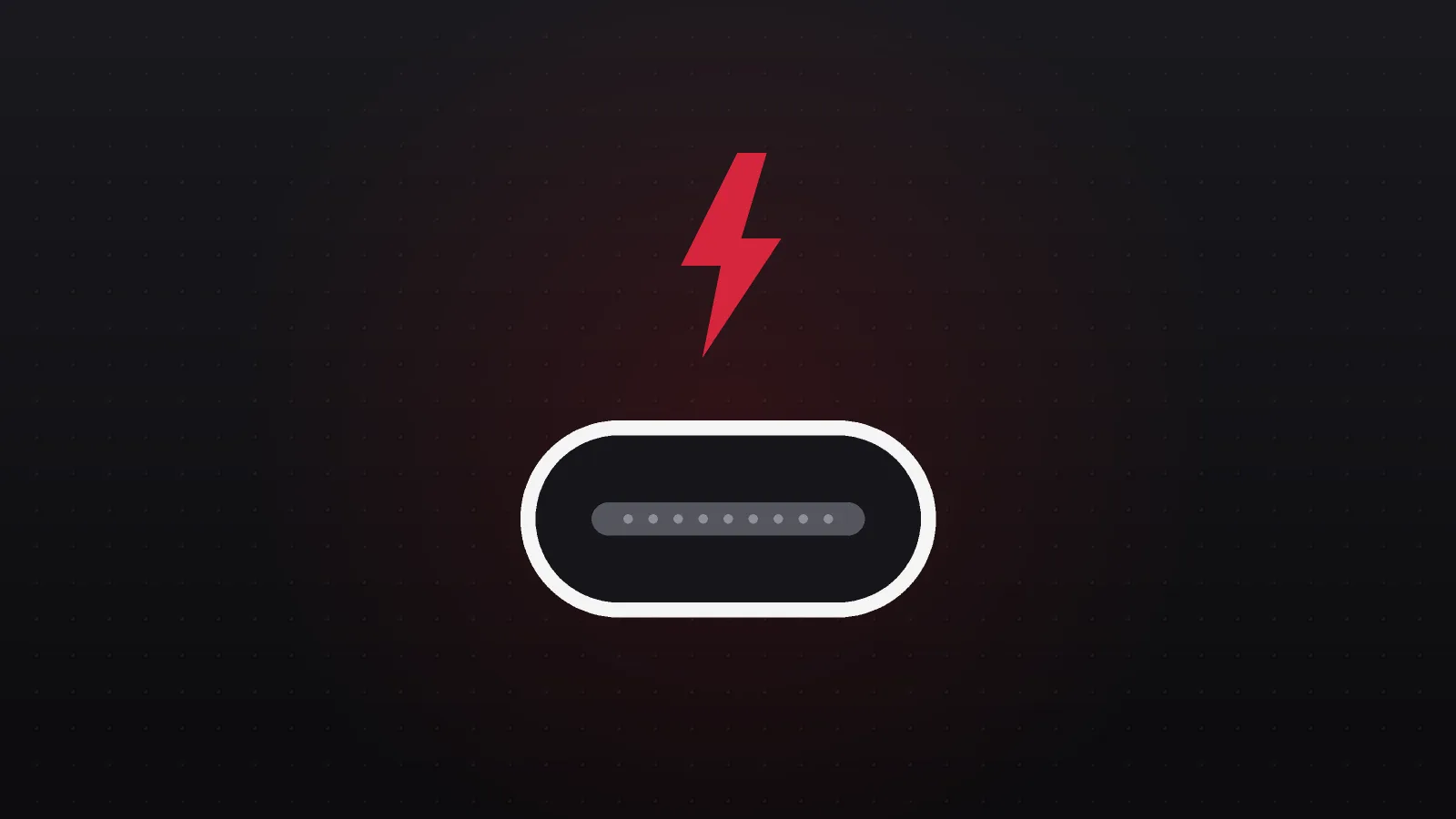
USB-C is only a connector. Charging speed depends on the charger, the cable and the USB Power Delivery standard, which runs from 15W up to 100W, and up to 240W with certified extended-power cables. Match the charger and a correctly rated cable to your device.
Table of contents 7 sections
- USB-C is a plug shape; charging speed comes from the standard behind it, usually USB Power Delivery.
- Power in watts is volts times amps: 20V at 5A is 100W, and 48V at 5A is 240W.
- Most cables stop at 60W, so higher power needs a cable rated for 5A.
- A stronger certified charger is safe, because the device draws only what it needs.
- In the EU, USB-C is mandatory for phones since December 2024 and for laptops since April 2026.
USB-C charging explained in one sentence: USB-C is a connector, not a promise of speed. Two cables with identical plugs can charge a laptop at very different rates, and one charger can power a phone but starve a laptop. What decides the result is the charging standard, usually USB Power Delivery, and the weakest part of the chain between wall and device.
USB-C charging explained: a connector, not a speed
The oval plug is a physical shape. Data speed and charging power are separate specifications that manufacturers add on top. A cable can carry fast data and charge slowly, or the reverse. Look for the power rating of the cable and of the charger, not the shape of the plug.
USB-C power levels, from 15W to 240W
Power in watts equals volts multiplied by amps. The USB Implementers Forum, which maintains the standard, describes the options on its USB Power Delivery page.
| Level | Voltage and current | Maximum power |
|---|---|---|
| Basic USB-C | 5V, up to 3A | 15W |
| USB PD, standard cable | 20V, up to 3A | 60W |
| USB PD, 5A cable | 20V, up to 5A | 100W |
| USB PD 3.1 EPR | 48V, up to 5A | 240W |
Many phone chargers also support Programmable Power Supply, a feature of USB Power Delivery that lets the charger adjust voltage in small steps so the phone can charge quickly with less heat.
Why the cable matters as much as the charger
Most cables are built for 3 amps, which caps charging at 60W. Reaching 100W needs a cable rated for 5 amps, and 240W needs one certified for extended power. A cheap cable that does not announce its rating will quietly limit a powerful charger. If a laptop charges slowly, replace the cable before you replace the charger.
How to tell what a cable can do
Look for a printed or packaged power rating, and for certification logos from the USB Implementers Forum, which show a cable's maximum power. If a cable carries no marking at all, assume it is built for 60W and slow data. Some phone makers also use their own fast-charging protocols next to USB Power Delivery. Those reach full speed only with the maker's own charger and cable, and fall back to standard speeds with anything else.
Can a bigger charger damage my device?
Not with properly certified equipment. The device and charger negotiate, and the device draws only what it can accept. A 100W charger will give a phone the few watts it needs. The risk comes from uncertified chargers and cables that skip the safety checks, so buy products that carry certification marks or come from established brands.
How to choose a USB-C charger and cable
- Find your device's maximum charging power in the manual or specifications. Laptops commonly need 45W to 100W, and phones far less.
- Choose a charger at or above that figure. A larger one is fine and leaves room for your next device.
- Match the cable to the charger. Use a 5A-rated cable for anything above 60W.
- Check how multi-port chargers share power. Plugging in a second device usually splits the total.
- Consider GaN chargers if you travel. They deliver the same power in a smaller body.
Why every new device now uses USB-C in the EU
European Union rules under Directive (EU) 2022/2380 made USB-C the common charging port. Since 28 December 2024, phones, tablets, headphones, cameras, handheld game consoles, e-readers, keyboards and several other portable devices sold in the EU must use it. Laptops joined on 28 April 2026. The rules also aim to let buyers choose to purchase a device without a new charger, to cut waste. You can read the directive on EUR-Lex.
The effect reaches beyond Europe. Manufacturers prefer one design for global markets, which is one reason Apple moved its iPhone to USB-C in 2023.
For more on devices and the standards that shape them, see our gadgets section.
Frequently asked
- USB Power Delivery — USB Implementers Forum
- Directive (EU) 2022/2380 on the harmonisation of charging for radio equipment — EUR-Lex
0 comments
No comments yet — be the first.