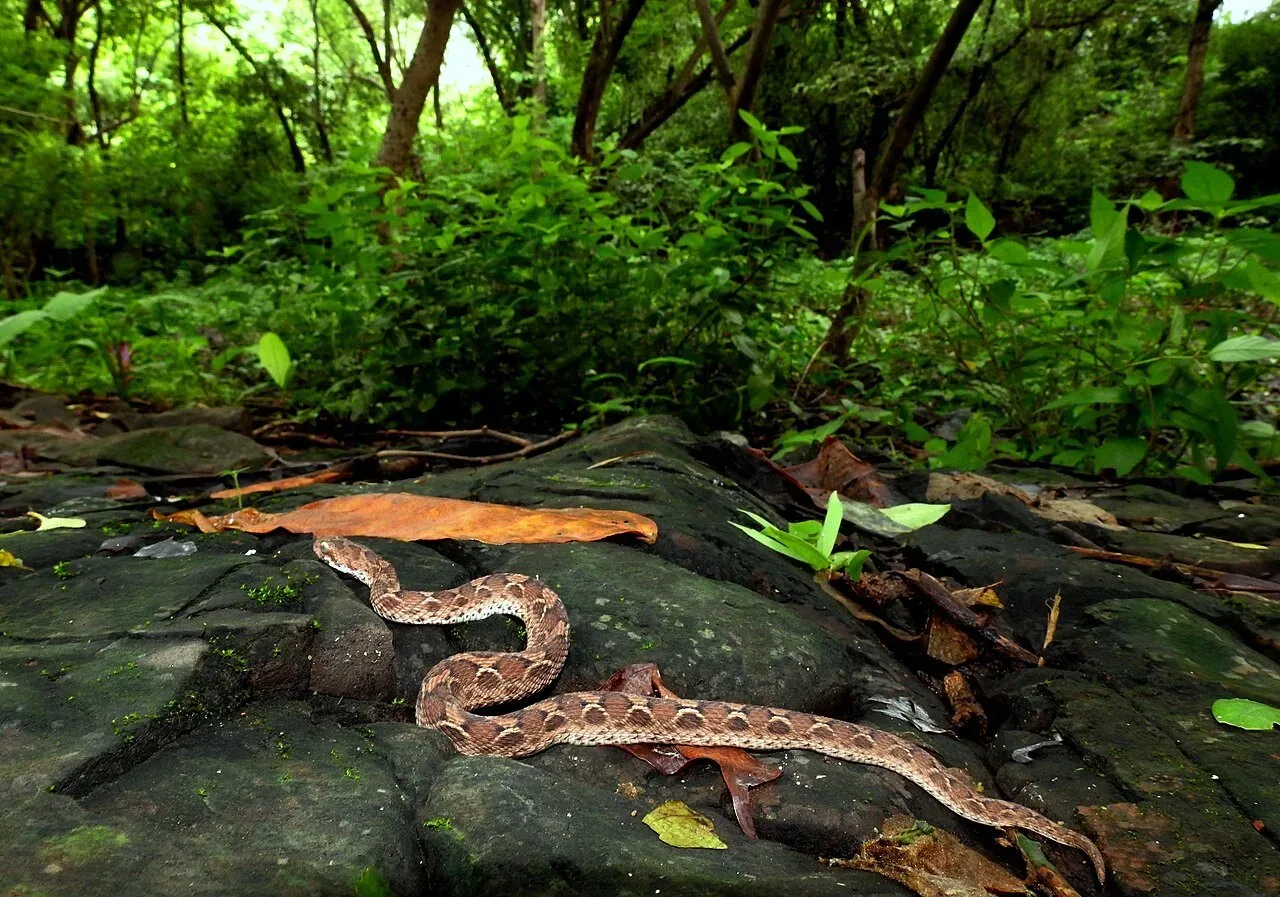
A PLOS Medicine study published on 25 August 2026 estimates that snakebites kill between 274,000 and 513,000 people a year and envenom at least 2.1 million, possibly 7 million. Earlier estimates from 2008 put deaths at 20,000 to 94,000. Sub-Saharan Africa carries about 45 percent of the burden.
Table of contents 6 sections
- A PLOS Medicine study estimates 274,000 to 513,000 snakebite deaths a year worldwide.
- At least 2.1 million people are envenomed annually, and the true number could reach 7 million.
- Most countries with venomous snakes, 91 of 170 for envenoming, lack robust data, which kept earlier counts low.
- Sub-Saharan Africa accounts for about 45 percent of envenomings and deaths.
- The WHO aims to halve snakebite deaths and disability by 2030, a much bigger task at the new scale.
Venomous snakes may kill between 274,000 and 513,000 people every year, several times more than the estimates health agencies have relied on for almost two decades. The new range for snakebite deaths comes from a study in PLOS Medicine whose lead author set out the findings for a general audience on 12 October 2026, and the story has spread widely since.
The same work estimates that at least 2.1 million people are envenomed each year, meaning venom actually enters the body, and the real figure could be as high as 7 million. More than 800,000 survivors a year are left with long-term disabilities.
Why snakebite deaths were undercounted for so long
The short answer is that most places do not count. Of 170 countries with venomous snakes, the authors found 91 had no robust data on envenoming and 100 had no robust data on deaths. In his article for The Conversation, lead author Dileepa Ediriweera of the Liverpool School of Tropical Medicine summed it up: "Over half of the countries where venomous snakes pose a threat don't keep count."
Many bites happen in rural farming areas, and the authors point out that both hospital and community records carry known biases, from counting mainly severe cases to miscoding. Each of those gaps pushes official tallies of snakebite deaths down.
The team's previous global estimate, published in 2008, put annual snakebite deaths at 20,000 to 94,000. The new low estimate alone is nearly three times the old upper bound.
How the researchers built the new estimate
The study, titled "Estimates of global burden of snakebite: A literature review and geostatistical modelling study," was published in PLOS Medicine on 25 August 2026. The authors reviewed studies from 79 countries published up to 31 March 2025, then used a statistical model to fill in places without data.
That model links known bite rates to factors that predict risk: climate, how many snake species live in an area, and socioeconomic indicators. It produces two numbers for each country, a cautious floor and a higher ceiling, which is why the headline figure is a range and not a single number.
It is a model, and the authors say so. They list scarce and uneven data, assumptions such as treating half of all reported bites as envenomings when only total bites were available, and less precise death estimates because fewer studies report mortality. They also describe their associations as predictive, not causal. The range should be read as the best current estimate of a poorly measured problem, not a precise count.
Where the burden falls hardest
Sub-Saharan Africa carries the largest share. The paper's abstract puts the region at about 45% of global envenomings and deaths, and people there are envenomed and killed at nearly three times the rate seen in South Asia. South Asia accounts for roughly 27 percent of deaths, East Asia and the Pacific for about 13 percent, and Latin America and the Caribbean for about 10 percent.
Ediriweera names Nigeria, the Democratic Republic of Congo and Ethiopia as facing a heavy burden because of dense rural populations and high exposure on farms. The species involved include saw-scaled vipers, puff adders, African cobras and mambas. Low-income countries have the highest rates of both envenoming and death.
Europe, Central Asia and North America together account for less than 1 percent of snakebite deaths in the study's estimates.
Does this change what the WHO is aiming for?
The World Health Organization's goal is to halve deaths and disability from snakebite by 2030. A larger baseline does not change that target, but it changes the scale of the effort needed to reach it. Halving 20,000 deaths and halving several hundred thousand are very different jobs.
Ediriweera argues that "better data cannot solve the problem" on its own. The steps he lists are practical: map risk country by country, stockpile antivenom where bites are most common, train rural primary health workers to recognise and manage envenoming, and improve transport so patients reach treatment in time. Medical research is moving quickly in other fields, as our explainer on how CRISPR gene editing works shows, but for snakebite the bottleneck is often getting an existing treatment to the right village.
What this means if you live or travel in high-risk areas
The study does not give individual medical advice, and neither will we. The clear message from the authors is that snakebite is a medical emergency concentrated in rural, low-income regions, and that access to antivenom and to a health facility makes the difference. Travellers and residents should follow guidance from local health authorities and seek professional care at once after any bite.
What to watch next
The new estimates give governments and donors a number to plan around. Watch for whether countries with no data start recording bites, whether antivenom supply grows in the African countries the study highlights, and whether the WHO revises its progress reporting toward the 2030 target. The country-level maps in the PLOS Medicine paper are open access, so health officials and journalists can check the estimate for any country with venomous snakes.
Frequently asked
- Estimates of global burden of snakebite: A literature review and geostatistical modelling study — PLOS Medicine
- Snakebites are a far bigger problem than we knew: new study maps the hidden dangers — The Conversation
- Scientists reveal a hidden snakebite crisis killing up to 513,000 people a year — ScienceDaily



0 comments
No comments yet — be the first.