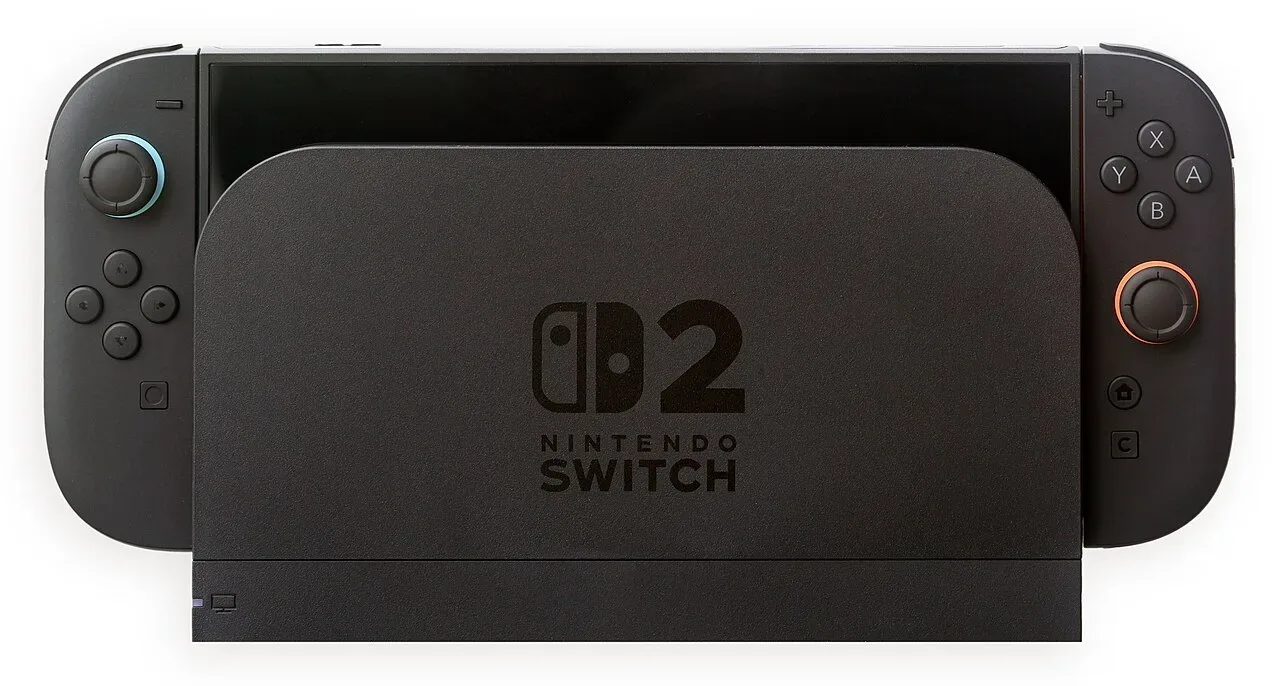
Nintendo shipped 6.49 million Switch 2 consoles in the six months to 30 September 2026, down 37.4% from a year earlier. Operating profit still rose 49.1% to 216.5 billion yen on software and digital sales and a tariff refund, and Nintendo kept its target of 16.5 million Switch 2 units for the fiscal year.
Table of contents 5 sections
- Nintendo reported on 5 November 2026 that Switch 2 hardware sell-in fell 37.4% to 6.49 million units in the six months to September.
- July to September shipments were 2.67 million, down 41.2% from 4.54 million a year earlier, and lifetime Switch 2 shipments reached 26.35 million.
- Operating profit rose 49.1% to 216.5 billion yen, helped by software sales, digital growth and about $300 million in tariff refunds.
- Nintendo kept its forecast of 16.5 million Switch 2 consoles, implying about 10 million in the second half.
- The forecast includes roughly 100 billion yen of higher component and tariff costs, mainly for memory.
Switch 2 sales fell 37.4% year on year to 6.49 million units in the six months to 30 September, Nintendo said on 5 November. Even so, the company's operating profit rose 49.1% to 216.5 billion yen, and it left its full-year forecast unchanged from the one it published on 8 May.
The gap between weaker hardware and stronger profit has two causes: more software sold and a one-time tariff refund. It also leaves a harder second half, because Nintendo still expects to ship 16.5 million Switch 2 consoles this fiscal year.
How far did Switch 2 sales fall?
Quarter by quarter, the pattern is clear. Nintendo shipped 3.82 million Switch 2 units in April to June and 2.67 million in July to September, against 4.54 million in the same quarter a year earlier. That is a 41.2% drop for the latest quarter, according to Anadolu Agency, and 30.1% below the previous quarter.
Lifetime Switch 2 shipments reached 26.35 million by 30 September, according to Gaming.net. The original Switch sold another 1.27 million units in the half, down 32.7%, for a lifetime total of 157.20 million.
One caution on the numbers: they are sell-in figures, which count consoles shipped to retailers and distributors, not consoles bought by players. A fall in shipments can reflect retailers holding less stock as much as weaker shop-floor demand, and Nintendo's results do not separate the two. The original Switch also kept its place in the mix, and Tomodachi Life: Living the Dream reached 8.81 million copies on that older system.
Why did profit rise while hardware shrank?
Software did the work. Switch 2 game sales rose 18.8% to 24.49 million units, and original Switch software rose 6.8% to 65.73 million. Mario Kart World added 1.78 million copies in the period for a lifetime 16.48 million, while Splatoon Raiders sold 2.42 million and Fire Emblem: Fortune's Weave 1.34 million.
Digital sales grew 60.5% to 249.6 billion yen, which was 60.7% of sales on Nintendo's own platforms. Digital sales often carry higher margins than boxed games, and the operating margin rose from 13.2% to 22.4%. Net sales fell 12.1% to 966.0 billion yen, while gross profit rose 22.1% to 486.4 billion yen.
The company also booked about $300 million in US tariff refunds as a reduction in cost of sales in the first quarter. That is a one-off, so the margin will not necessarily hold at this level.
What do Switch 2 sales mean for the forecast?
Nintendo kept every target. For the year ending March 2027 it expects net sales of 2.05 trillion yen, down 11.4%, operating profit of 370.0 billion yen, up 2.7%, and 60 million software units, up 23.2%. For hardware, it forecasts 16.5 million Switch 2 consoles, down 16.9%.
Since 6.49 million were shipped in the first half, the forecast implies about 10 million more in the second half, which includes the holiday season. That is a large number against the 2.67 million shipped in the latest quarter, so the target relies on a strong November and December.
Put together, the first half tells a story of a console business in transition. Nintendo now has a large base of Switch 2 owners buying games, which is where the profit comes from, and fewer new buyers entering each quarter. Software sell-in of 24.49 million Switch 2 units in six months means each console already shipped is carrying a growing library. The forecast of 60 million software units for the full year, up 23.2%, shows where the company expects growth to come from while hardware shrinks.
How much are memory prices costing Nintendo?
The forecast includes about 100 billion yen in cost of sales for higher component prices, particularly memory, and for tariffs. Anadolu converts that to roughly $633 million. Memory has been a worry for hardware makers for months. GamesBeat reported in February that investors were wary of rising memory prices, which it linked to demand for AI chips. For the demand side of that squeeze, see our explainer on how much power AI data centers use.
Nintendo has not announced a price change tied to these costs in the reports reviewed for this article. Rivals face the same pressure, and our coverage of the Xbox Project Helix report touches on how hardware pricing is shifting.
What to watch next
The next data point is Nintendo's nine-month report, which will show whether the holiday quarter closes the gap to 16.5 million. Watch also for whether Nintendo keeps its forecast if memory costs rise further, and whether digital sales keep their 60% share. A big game release or a bundle in the autumn could lift shipments, while a price change would signal that the cost squeeze is spilling onto buyers.

0 comments
No comments yet — be the first.