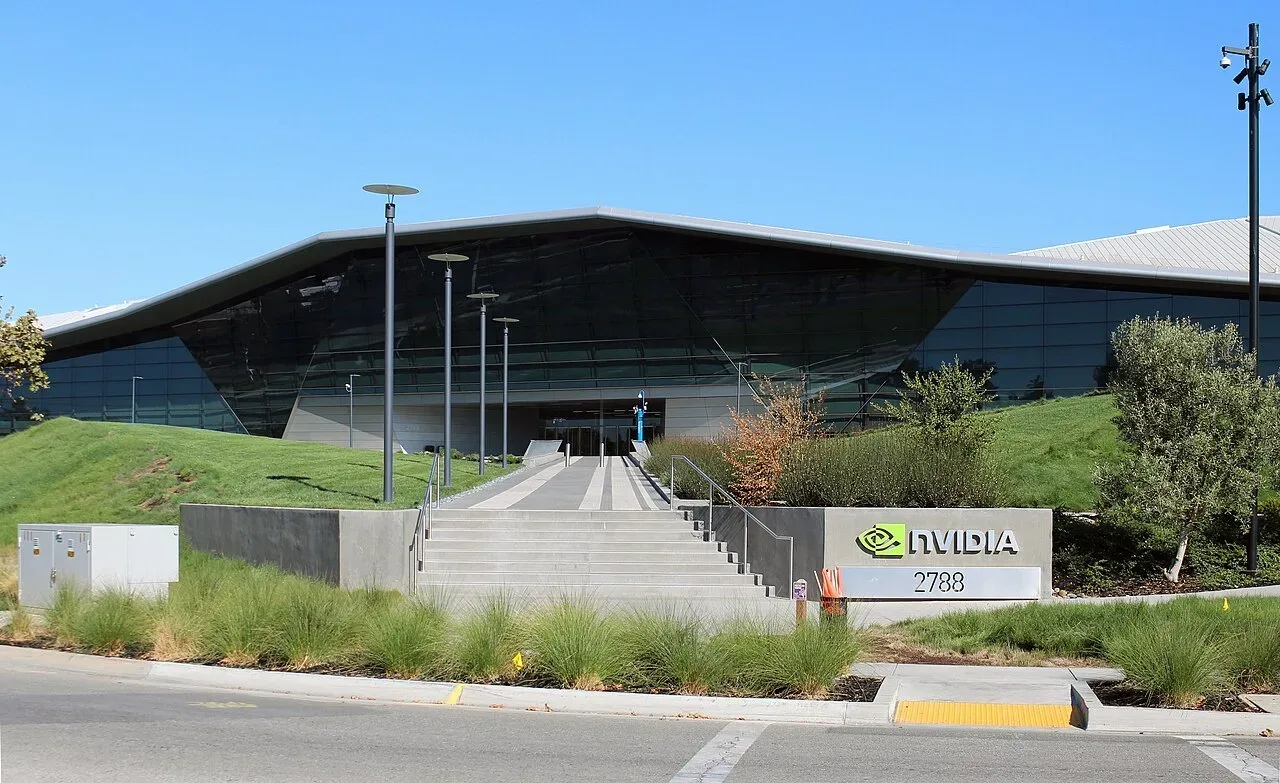
Nvidia's board unanimously reinstated Jensen Huang as president, CEO and director on 23 November 2026, 11 days after he resigned. The company cited input from senior US government levels and said an independent investigation will continue. Nvidia shares rose about 31 percent and the Nasdaq about 6.5 percent that day.
Table of contents 6 sections
- Nvidia's board unanimously reinstated Jensen Huang as CEO on 23 November 2026, 11 days after he resigned on 12 November.
- Nvidia shares rose about 31 percent to around $165, and the Nasdaq Composite gained about 6.5 percent in the session.
- The board said it received input from senior US government levels and sees no national security risk, while an independent committee investigation continues.
- Shares remain well below the roughly $240 level of six weeks earlier, and SEC and DOJ inquiries into the company are still open.
Nvidia reinstates Jensen Huang as president, chief executive and board member, effective immediately, the company said on 23 November 2026. The unanimous board vote came 11 days after Huang resigned, and it sent Nvidia shares up about 31 percent in Monday's US session and pulled the whole market with them.
What the filing says as Nvidia reinstates Jensen Huang
The announcement, filed with the SEC as a Form 8-K press release, says the board voted unanimously and was satisfied with Huang's candor and ability to lead. It adds that the board "received input from senior levels of the United States government" and is confident the reinstatement "poses no national security risk."
Harvey C. Jones stays on as board chair. Colette Kress, who had been interim CEO, goes back to being chief financial officer only. The release does not explain what changed in 11 days, and it does not say what the earlier investigation had found so far.
That investigation is not finished. After reporting that Huang was "the target of a foreign intelligence effort," in the company's words, the board formed a committee made up solely of independent directors and hired independent counsel. The release says that committee's work "will proceed to conclusion" and that Huang supports it and will cooperate.
How did we get here in 11 days?
Huang resigned on 12 November, effective immediately. Nvidia's announcement of that resignation gave no reason, named Kress interim CEO and said a search for a permanent chief was under way. The same announcement said Nvidia would report quarterly results on 17 November, which our earnings coverage covers.
According to ABC News, the board had ruled out a return as recently as 17 November. ABC also quotes chair Harvey C. Jones saying "We have every confidence in Jensen." The reversal followed public pressure. Al Jazeera reports that a petition calling for his return passed 180,000 signatures, and that President Trump said his own intervention played an important role. Trump told CNBC he had "convinced" the board, according to ABC's live coverage.
How far did the market move?
The size of the reaction is the story for most readers, because few moves of this scale follow a single personnel announcement. By the close on Monday the S&P 500 was up 4.7 percent, the Dow about 3 percent and the Nasdaq Composite about 6.5 percent, according to ABC's markets blog. Yahoo Finance's live coverage called it the best day for the three indexes since April 2025, and said the S&P 500 snapped a seven-day losing streak.
Nvidia itself rose roughly 31 percent to about $165 a share, a figure that matches the quote shown on Yahoo Finance. ABC's blog estimated the company added about US$1 trillion in market value in one session and the S&P 500 about US$3 trillion. The VIX, the market's usual fear gauge, fell from a high near 40 on Friday to below 27.
The rebound reached other chip and hardware stocks. Yahoo reported Intel up almost 13 percent and Dell up more than 19 percent. On Tuesday, ABC's blog showed Japan's Nikkei up 3.9 percent and South Korea's Kospi up 7.1 percent at the close.
Is Nvidia back to where it started?
No, and the arithmetic shows why. ABC's blog says the shares were still near $165 against about $240 six weeks earlier. A one-day jump of 31 percent sounds enormous, but it follows a steep fall, and the gain only recovers part of it.
Morningstar, quoted in the same blog, said Nvidia is not "back to even" with where the saga began, pointing to continuing national security and export-control scrutiny and a possible SEC accounting investigation. ABC separately reports that the SEC and the Department of Justice are examining the company over potential accounting issues and alleged chip smuggling. Those are inquiries, not findings, and Nvidia has said it will keep cooperating with government investigations.
Critics took aim at the board's reasoning. Senator Elizabeth Warren called the decision "reckless," and Representative Raja Krishnamoorthi called it "outrageous," ABC reports. Warren has said the board still owes Congress answers on export-control compliance. Trump, for his part, said Huang "did nothing wrong," according to Al Jazeera, and told CNBC the Attorney General found no evidence of unlawful conduct. ABC says critics dispute the board's national security finding.
What does the new governance setup look like?
The 8-K contains a few structural changes worth noting. A National Security and Export Control Committee, also composed solely of independent directors, oversees trade compliance and national security risk and is engaging national security counsel. Nvidia is also searching for a Chief Compliance Officer, who would report to the Nominating and Corporate Governance Committee.
For a company whose chips sit at the center of US export policy, that is a notable admission that compliance needed more senior attention. It also gives investors and Congress two things to track: who gets the compliance job, and what the independent committee eventually concludes.
What to watch next
Once Nvidia reinstates Jensen Huang, the open questions shift from who runs the company to what the board eventually finds. Three dates and events matter this week. First, the independent committee's investigation, which the company says will run to its end with no timetable. Second, any congressional response: ABC's live blog reported that Huang is scheduled to testify before Congress on 3 December, a date we could not confirm in Nvidia's own filings, so treat it as reported rather than settled.
Third, the wider market backdrop has not gone away. Yahoo reported that bond markets were pricing about a 92 percent chance of a Federal Reserve rate hike on 9 December, with the 10-year Treasury yield near 4.92 percent. Our look at the October Fed decision explains how the central bank got here. One good session for Nvidia and the Nasdaq does not settle that question, and Monday's rally may prove easier to reverse than it was to start.
Frequently asked
- NVIDIA Board Reinstates Jensen Huang (Form 8-K press release) — U.S. Securities and Exchange Commission
- Nvidia stocks soar after Jensen Huang reinstated as chief executive — ABC News (Australia)
- Nvidia board reinstates Jensen Huang as CEO — Al Jazeera
0 comments
No comments yet — be the first.