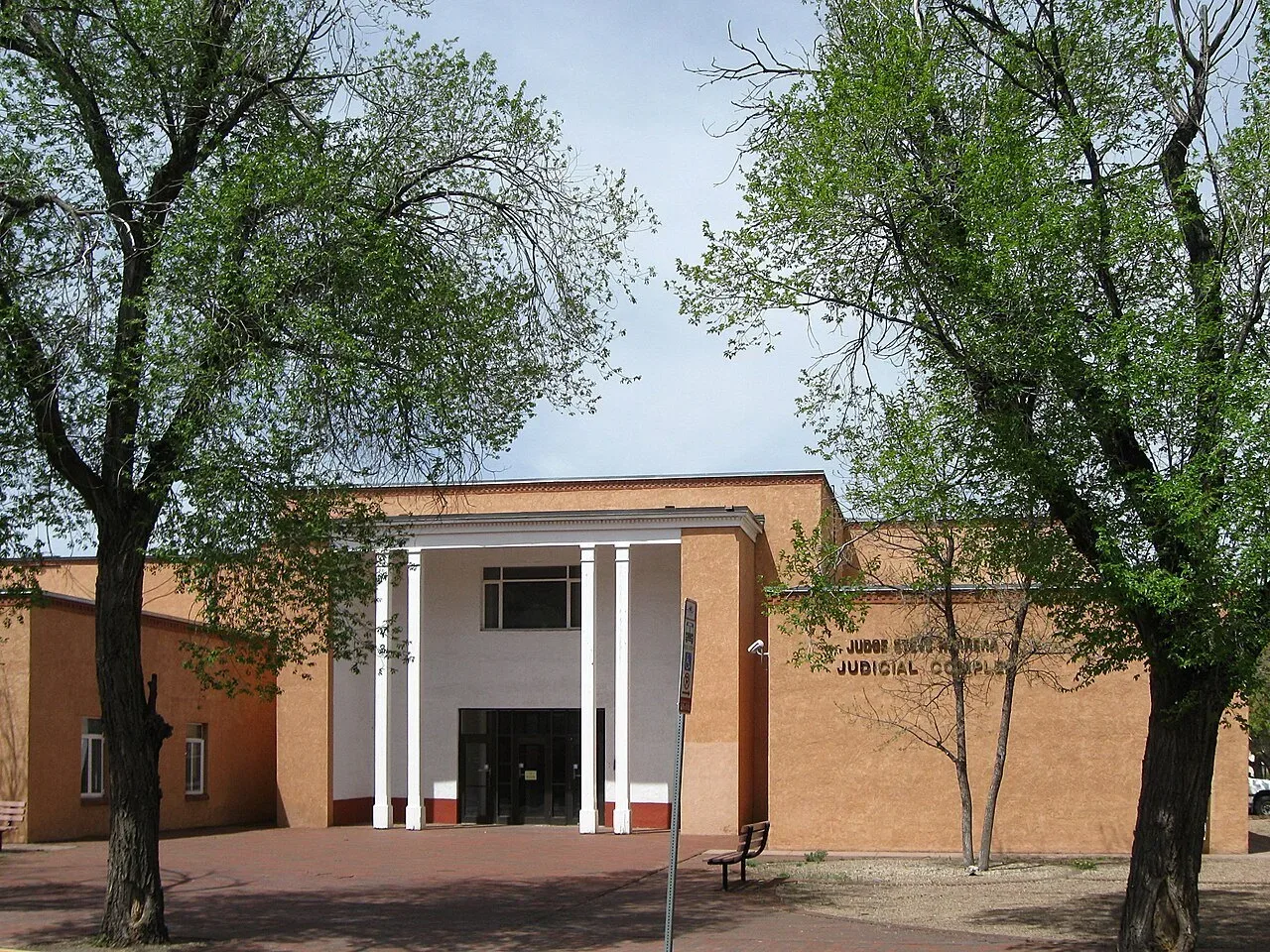
On 21 October 2026 New Mexico District Judge Francis Mathew ordered Meta to pay $25 billion after a jury found 43.9 million violations of the state's Unfair Practices Act over misleading Facebook privacy statements. The legal maximum exceeded $219 billion. Meta says it will appeal.
Table of contents 5 sections
- A New Mexico judge ordered Meta to pay $25 billion on 21 October 2026 over misleading Facebook privacy statements.
- A September jury found 26 of 29 Meta statements false or deceptive, adding up to 43.9 million violations.
- At $5,000 per violation the theoretical maximum topped $219 billion, which the judge cut to $25 billion.
- The case began in 2021 and grew partly out of the Cambridge Analytica scandal.
- Meta calls the suit a tax on speech and says it will appeal.
The Meta New Mexico ruling landed on 21 October, when state District Judge Francis Mathew ordered Meta Platforms to pay $25 billion for misleading Facebook users about how their personal data was handled. It is the largest penalty Meta has ever faced and, by New Mexico Attorney General Raúl Torrez's account, one of the largest ever imposed on a company by a single US state.
The judge's own summary is blunt: "Facebook promised users that they (the users) controlled their data. This was false." Meta says it will appeal.
What the jury found
The case went to trial in the 1st Judicial District Court in Santa Fe on 9 September. After about two weeks of testimony, the jury returned its verdict on 25 September, according to the Albuquerque Journal.
- Jurors weighed 29 public statements by Meta and its leaders on privacy and content moderation and found 26 of them false or deceptive.
- The statements spanned 2010 to August 2021 and came from earnings calls, TV interviews and press conferences, including remarks by Mark Zuckerberg and then chief operating officer Sheryl Sandberg.
- Each of the 26 statements was counted against nearly 1.4 million New Mexico Facebook users, producing 43.9 million violations of the state's Unfair Practices Act.
The judge wrote that Meta made the misleading statements "willfully and intentionally" and cited an internal "song sheet" used to coordinate the company's messaging.
How the Meta New Mexico ruling reached $25 billion
The arithmetic explains both the size of the number and why it could have been far larger. The Unfair Practices Act allows a civil penalty of up to $5,000 per violation. Multiply that by 43.9 million and the theoretical maximum tops $219 billion, as AdExchanger calculated. The judge cut that to $25 billion.
Meta's lawyer Matt Nicholson had argued that a sum as high as $40 billion would be "shocking to the conscience" and that the jury never found that any New Mexican actually saw the statements or was harmed by them. That argument is likely to return on appeal.
For context, the Federal Trade Commission's 2019 penalty against Facebook was $5 billion. AdExchanger notes that Meta just reported $64.2 billion in quarterly revenue, up 26 percent on a year earlier. One quarter of Meta's sales is about two and a half times the New Mexico penalty. Painful, not fatal.
Where the case came from
New Mexico sued in 2021 under then Attorney General Hector Balderas. The case grew partly out of the Cambridge Analytica scandal, in which, as Al Jazeera recounts, the political consultancy obtained data from as many as 87 million Facebook users without their consent for targeted political advertising.
It is also the third large bill from New Mexico courts this year. In March a jury in a separate 2023 suit ordered $375 million in civil penalties over the safety of young people on Facebook, Instagram and WhatsApp. In August a judge ordered a further $567 million to help repair harm caused by the platforms. Torrez says the money from the October judgment will go to a fund for the state's education system.
What Meta says and what an appeal could change
Meta's chief legal officer, C.J. Mahoney, said the ruling makes it all but impossible to do business in New Mexico and called the lawsuit an attempt to "impose a tax on speech" and set rules for what people can say online. The company says it is confident it will win on appeal and will keep operating Facebook in the state meanwhile.
The appeal will probably focus on two weak points the defence already raised: counting each statement once per user, and the lack of proof that individual users saw or relied on what executives said. If an appeals court rejects the per-user counting, the penalty could shrink sharply. If it upholds it, every state attorney general with a consumer protection law will have a template.
Torrez called the judgment "an unambiguous message, to Silicon Valley". The more practical message is for compliance teams: privacy promises made in earnings calls and TV interviews can be treated as consumer claims, and each user who heard them can count.
What this means for Facebook users
The judgment does not put money in individual users' pockets, and nothing changes in the app because of it today. It is still a good moment to check what you share:
- Review the apps and websites connected to your Facebook account and remove the ones you no longer use. Cambridge Analytica got its data through a third-party app.
- Check who can see your past posts and profile details in Facebook's privacy settings.
- Secure the account itself with stronger sign-in. Our explainer on how passkeys work covers one option.
Next, watch for Meta's formal notice of appeal and whether the court requires a bond while it proceeds. Watch too for other states. AdExchanger notes Meta recently agreed to pay up to $18 billion to settle a separate case brought by 29 states, and a ruling this large gives every one of them a reason to read Judge Mathew's order closely.


0 comments
No comments yet — be the first.