Genie 4 is Google DeepMind's real-time world model, announced on 27 October 2026. It is the first in the Genie line to generate audio natively, including music, ambient sound and interactive dialogue, and it lets users change a running simulation with a typed instruction.
Table of contents 4 sections
- Genie 4 is the first Genie model to generate audio natively, including spoken dialogue.
- A running simulation can be redirected with a typed sentence rather than restarted.
- Gemini Omni anchors appearance and behaviour while Gemini 3.8 Flash acts as a guiding agent.
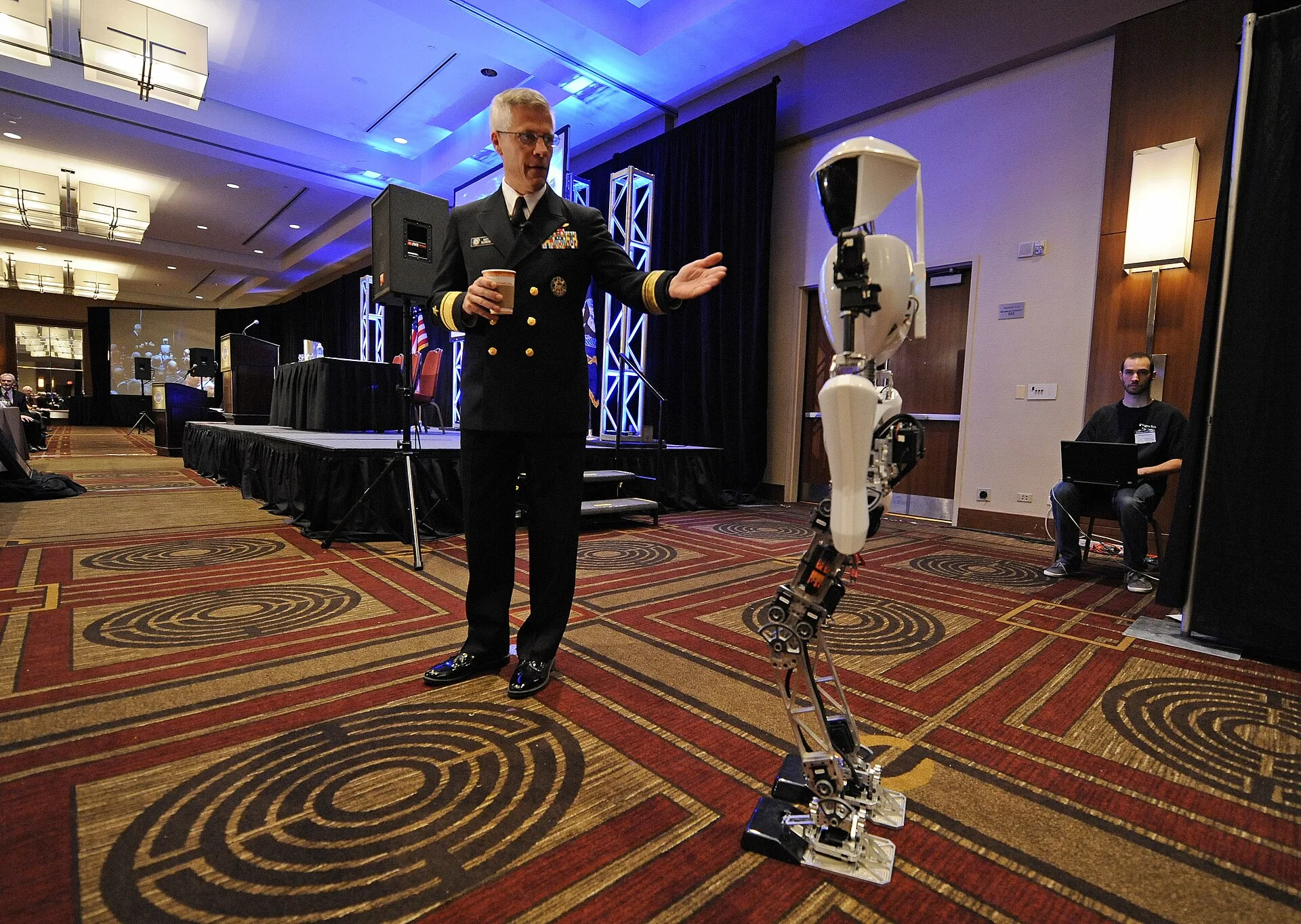
- DeepMind demonstrated it generating training environments for Apptronik's Apollo humanoid robot.
- It is a research preview for trusted testers, with a waitlist open for wider access.
Google DeepMind announced Genie 4 on Monday, and its headline feature is one you hear rather than see. This is the first real-time world model in the Genie line to generate audio natively — ambient noise, music, and dialogue from characters who answer you while the world keeps running.
The second feature is the one that will matter longer. You can redirect a simulation while it is happening. Type a sentence and the weather changes, the camera moves, a person walks into the frame. Gemini adapts the instruction to whatever is already on screen rather than restarting the scene, and keeps the world progressing between your inputs. Movement itself is ordinary keyboard control.
What is actually doing the work inside Genie 4
It is not one model. DeepMind describes a stack. Gemini Omni anchors how things look and behave, so that a generated street resembles a street rather than a plausible smear. Other Gemini models supply the reasoning that holds a scene together from one moment to the next. A smaller model, Gemini 3.8 Flash, runs as a guiding agent — planning steps, checking frames, deciding whether the world still makes sense.
That architecture is worth noticing, because it says where the difficulty lives. Generating a convincing frame was solved a while ago. Generating the ten-thousandth frame so that it still agrees with the first one was not. The fix here is not a bigger generator. It is a second model watching the output and steering it, which is the same shape as the agent scaffolding that has quietly taken over the rest of the field.
The demo that gives away the plan
Most coverage led with the entertainment angle: worlds you can talk to, characters that talk back. DeepMind's own post spends its most interesting paragraphs somewhere else entirely — on robots.
In one experiment, Gemini 4 Argon took the task of playing checkers, broke it into steps, and fed those steps to Genie 4 as text captions while the simulation rendered. What appeared was Apptronik's Apollo humanoid playing a game it had never been programmed to play, inside a world generated on demand.
Robot training is bottlenecked on data. Real-world trials are slow, expensive and occasionally destructive. Hand-built simulators are fast but brittle, and a policy trained in one rarely survives contact with a real kitchen. A world model that can produce plausible environments on request, with sound, and accept natural-language direction about what should happen next, is a data factory aimed squarely at that bottleneck.
The checkers demo is a party trick. The reason to build the machinery behind it is not. Look at where the money is going — Alphabet alone is spending up to $205bn this year, and said this week that 2027 will be higher — and a tool that manufactures training data for physical machines is a more plausible return than a toy that generates landscapes.
What DeepMind admits it cannot do
The post is unusually plain about the limits, and they are the ones you would expect:
- Complex physical interaction is still an open problem.
- Text inside the generated world is often not legible.
- Audio accuracy in real time is not solved.
- Spatial accuracy drifts — it cannot reproduce a real place faithfully.
- Object permanence degrades over a longer run, particularly after several complex edits.
DeepMind also says the model struggles when several independent agents act at once, which is a polite way of saying that a world with two minds in it is harder than a world with one. For robotics that is not a cosmetic limitation. Most interesting tasks involve something else moving.
One widely repeated number deserves a caveat. Several outlets reported that Genie 4 holds a coherent scene for about two minutes, double Genie 3's limit. DeepMind's own announcement gives no figure at all — it says only that the model maintains coherent environments over short sessions. The two-minute claim may well be accurate. It is not in the primary source, and it has been repeated as though it were.
Who can use it
Genie 4 is a research preview limited to trusted testers. DeepMind says it is coming to Google AI Ultra subscribers through Project Genie, and to early access partners in the Gemini API and Google AI Studio. A waitlist is open. There is no pricing and no list of countries.
Which places it in the same bracket as Google's other releases this month: announced loudly, demonstrated well, and available to almost nobody. The company also restricted its strongest model to vetted security teams last week. For Genie 4 the gatekeeping is about polish rather than danger, but the pattern is becoming the rule rather than the exception, and it makes independent verification of any of these claims effectively impossible for now.
Frequently asked
- Genie 4: A new generation of world simulation — Google DeepMind
- Introducing Genie 4 — Google


0 comments
No comments yet — be the first.