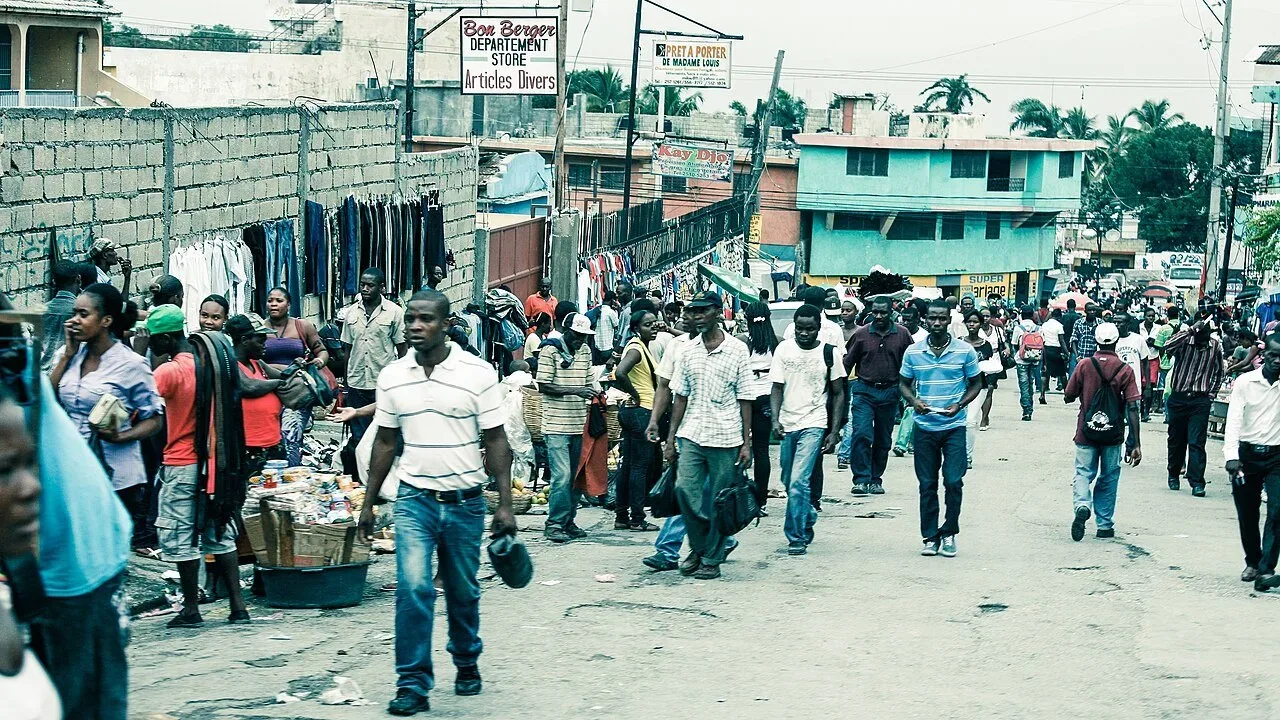
El Salvador sent more than 2,000 troops to Haiti after four Salvadoran aviation technicians disappeared on 18 October 2026. The UN says only about 200 of them fall under its Gang Suppression Force. Haiti's prime minister says the forces operate under Haitian authority, while rights groups criticise Bukele's methods.
Table of contents 5 sections
- President Nayib Bukele sent more than 2,000 troops to Haiti after four Salvadoran aviation technicians vanished on 18 October.
- The UN says only about 200 Salvadoran soldiers fall under the UN-backed Gang Suppression Force.
- Haitian police said on 6 November that gang leader Mathias Saintil was neutralised in an operation.
- Al Jazeera reported that up to 90 percent of Port-au-Prince is under gang control, and the UN counts 1,123 killed from July to October.
- Haiti's elections have been pushed to 18 July 2027, with fewer than one million voters registered.
The deployment of El Salvador Haiti troops became one of the most debated security stories in the Caribbean this month, after President Nayib Bukele sent more than 2,000 soldiers to Haiti following the disappearance of four Salvadoran aviation technicians on 18 October 2026. Al Jazeera, in reports of 5 November and 7 November, described patrols in Haitian streets, a police operation that killed a gang leader, and a dispute over who commands the foreign forces.
Why did El Salvador send troops to Haiti?
The four technicians were involved in the UN-backed Gang Suppression Force, known as the GSF, when they disappeared after a gang attack on 18 October. Haitian police later found the burned remains of a truck they said the group used, in the Santo neighbourhood of Croix-des-Bouquets outside Port-au-Prince. The men have not been found, according to Al Jazeera. Bukele responded by sending more than 2,000 troops with military hardware and called the deployment a rescue mission. On 21 October he wrote that his objective was to ensure the four compatriots "return home alive and unharmed."
Since then Bukele has posted videos of armed Salvadoran soldiers patrolling Haitian streets, and on social media has written, "Gather your gangs so we can go fight with them." He also posted a video he said showed Salvadoran helicopters firing on gangs attacking GSF soldiers from Chad, writing that the gangs "no longer have the upper hand." He has urged Haitians to rise up and insisted his forces are not invaders.
Who commands the El Salvador Haiti troops?
That is the central dispute. UN spokesman Stephane Dujarric said only about 200 Salvadoran soldiers fall under the GSF's jurisdiction, which leaves the rest outside the UN-backed chain of command. He added that security operations must follow international human rights and humanitarian law. Haitian Prime Minister Alix Didier Fils-Aime said the foreign forces operate under Haitian authority and are there to support the state.
The GSF began arriving in Haiti in April 2026. The UN Security Council renewed its mandate in September, extending it until March 2027. Al Jazeera reported that the force faces insufficient resources and staffing, the same problems that hampered its predecessor, the Kenyan-led Multinational Security Support mission.
What has changed on the ground?
On Friday 6 November, Haiti's National Police said gang leader Mathias Saintil, described as head of the Boston gang from a Cité Soleil neighbourhood, had been neutralised in an operation. A police source said he died later in hospital. Prime Minister Fils-Aime posted: "One less gang leader." On the same day Bukele asked a social media user for a gang leader's address, writing, "Give us the exact address, and we will destroy it," according to Al Jazeera.
Gang control remains extensive. Al Jazeera reported that as much as 90 percent of Port-au-Prince is under gang control, and the UN says at least 26 gangs operate in and around the capital. The UN reports 1,123 people killed and 440 injured between July and October 2026, and at least 1.4 million people displaced. Roughly half of gang members are children and teenagers under 18, the UN estimates.
Doctors Without Borders (MSF) said 30 people, including women and children, were injured in the eight days after 18 October from gunfire and drone explosions. The organisation's head of mission in Haiti, Davina Hayles, warned that the fighting and the added foreign forces could claim more victims and displace more people. Drone violence is a feature of other current conflicts too, as in our report on the Abyei drone strike in Sudan.
What are the concerns about rights and politics?
Human rights watchdogs have criticised Bukele's approach to gang violence at home, which has included mass arrests and mass trials, and he has jailed tens of thousands of people under a state of emergency since taking office in 2019, Al Jazeera reported. Gang leader Wilson Joseph, known as Lanmo Sanjou and head of the 400 Mawozo, wrote to the UN Secretary-General seeking dialogue and expressing concern about civilian deaths.
The political backdrop is fragile. Haiti has had no elected government since the 2021 assassination of President Jovenel Moise. Last month the nine-member Provisional Electoral Council delayed elections, moving the first round from 13 December to 18 July 2027, with a second round on 4 October 2027. Fewer than one million voters have registered, out of about 6.5 million Haitians with eligible ID cards. An international food security assessment found about 5.94 million Haitians facing acute hunger.
What to watch next
The fate of the four technicians is the immediate test of the mission Bukele set out. Watch for any clarification from the UN on the legal status of the Salvadoran troops outside the GSF, which by the UN figure is most of the more than 2,000 deployed, any reports of civilian casualties from the joint operations, and whether other gang leaders respond to Wilson Joseph's call for dialogue. The next fixed date is March 2027, when the GSF's Security Council mandate comes up for renewal.

0 comments
No comments yet — be the first.