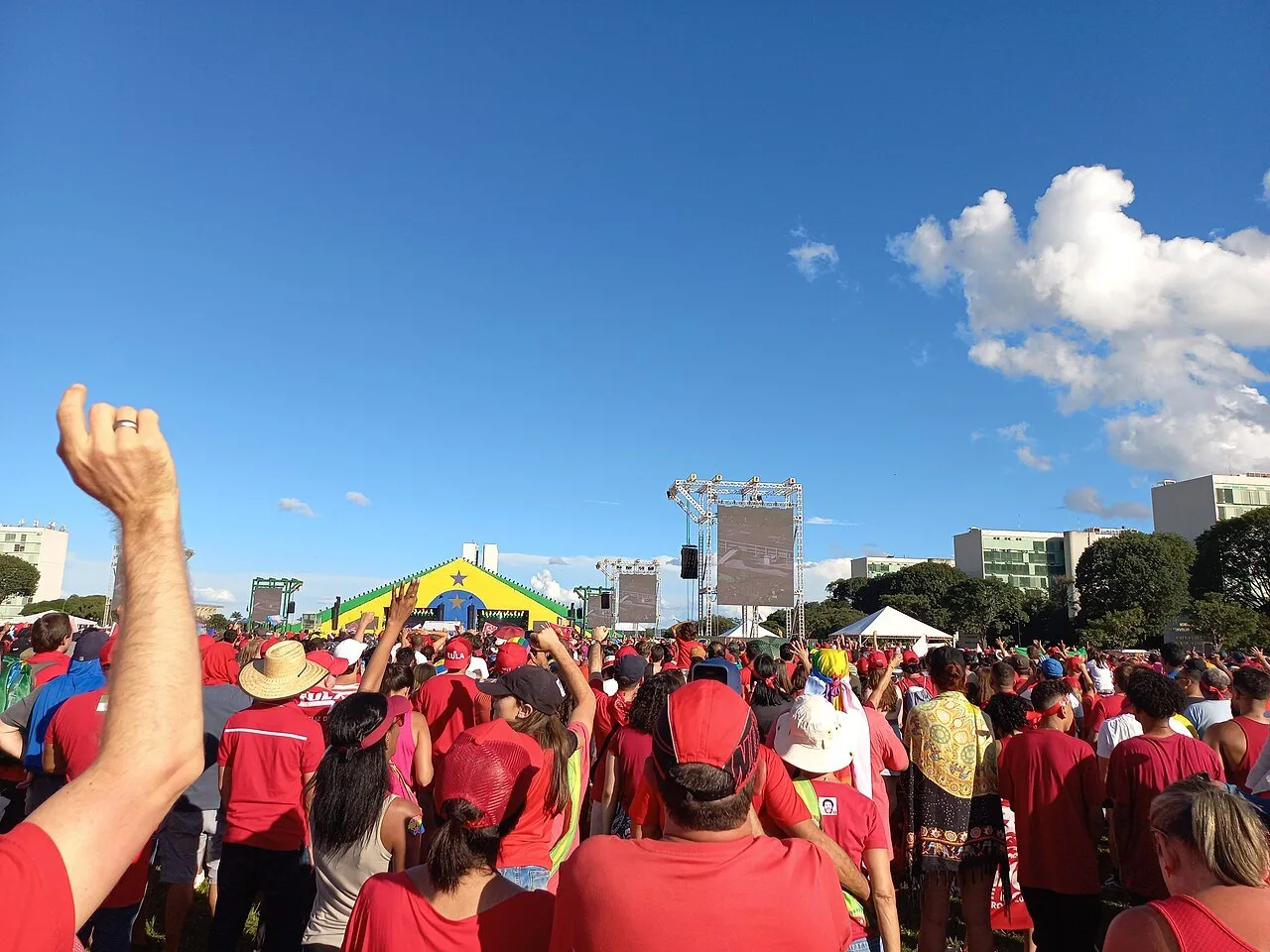
Luiz Inácio Lula da Silva won Brazil's presidential runoff on 25 October 2026 with 51.79 percent against 48.21 percent for Flávio Bolsonaro, a margin of nearly 4.4 million votes. It is his fourth term. Bolsonaro refused to concede and asked for the vote to be annulled.
Table of contents 6 sections
- Lula won the 25 October runoff with 51.79 percent to Flávio Bolsonaro's 48.21 percent.
- He is the first candidate to win a Brazilian presidential runoff after trailing in the first round.
- Flávio Bolsonaro refused to concede and asked for the result to be annulled over extended polling hours.
- Bolsonaro's Liberal Party is the largest force in both chambers of Congress, which limits Lula's room to govern.
- Lula is due to take office for his fourth term on 5 January 2027.
Luiz Inácio Lula da Silva won Brazil's presidential runoff on Sunday 25 October, taking 51.79 percent of the vote to 48.21 percent for Senator Flávio Bolsonaro. The Brazil election result hands Lula a fourth, non-consecutive term and makes him the first candidate to win a Brazilian presidential runoff after trailing in the first round.
The raw numbers show how tight it was: 64,256,232 votes for Lula against 59,826,041 for Bolsonaro, a gap of nearly 4.4 million on a turnout of 80.78 percent. Bolsonaro, the eldest son of former president Jair Bolsonaro, has refused to concede.
How Lula turned a first-round deficit into a win
Three weeks earlier the picture looked very different. In the first round on 4 October, Flávio Bolsonaro finished ahead with about 47 percent to Lula's 45 percent, a lead of more than 2.2 million votes, according to AP reporting carried by PBS NewsHour. Smaller candidates split the rest, led by Augusto Cury on 2.89 percent, Renan Santos on 2.24 percent and Ronaldo Caiado on 2.18 percent.
Two things moved between the rounds. Turnout rose from 78.92 percent to 80.78 percent, and the roughly 7 percent of voters who had backed minor candidates had to pick a side. Enough of them went to Lula to flip the race. AP found that voters were most worried about the cost of living and public security, and that both finalists faced corruption allegations involving relatives and allies, which left neither man with a clean ethical edge.
Why Flávio Bolsonaro rejects the Brazil election result
Bolsonaro asked for the result to be annulled. His complaint centres on a last-minute decision to keep some polling stations open for two extra hours, which he said caused chaos. He accused Justice Cristiano Zanin, a former lawyer for Lula, of "changing the rules of the game in the middle of the game."
"It's impossible to recognize the results of the election in the context of these things that happened," Bolsonaro said, according to AP.
Legal experts quoted by AP said there is little legal basis for an annulment, and the president of the electoral court said the extended hours did not affect the outcome. The family context matters here. Jair Bolsonaro is serving a 27-year prison sentence for attempting a coup after he lost the 2022 election to Lula, and he too has questioned the 2026 count and called for it to be annulled.
The dispute has an international edge. US President Donald Trump called the election "rigged" without offering evidence, and Vice President Geraldo Alckmin criticised the remark, according to the election record compiled on Wikipedia from news reports.
What Lula said on election night
Lula thanked voters and promised to respect all Brazilians regardless of gender or religion. He called the result "a defeat for denialism and lies" and put national sovereignty at the centre of his speech.
"This country will not accept being anyone's backyard," Lula told supporters, AP reported.
That line was aimed at Washington. Lula is one of Trump's most vocal critics in the region, and AP expects him to keep resisting US demands even as Brazil faces higher tariffs. Thousands of supporters gathered in São Paulo and Rio de Janeiro to celebrate.
A Congress that leans the other way
The presidential race is settled, but the legislature elected on 4 October points in a different direction. Bolsonaro's Liberal Party (PL) is the largest party in the 513-seat Chamber of Deputies with 121 seats, up 22. In the Senate, where 54 of 81 seats were contested, the PL won 29, up 14, while Lula's Workers' Party took 9.
That arithmetic is the bigger constraint on a fourth Lula term. Any budget, tax change or appointment that needs Congress will require deals with centrist and right-wing parties. Flávio Bolsonaro also keeps his Senate seat, so the defeated candidate will remain a daily presence in Brasília.
Why the result matters beyond Brazil
Brazil is Latin America's largest economy, with output of about $2.6 trillion a year, according to AP. A Lula government that leans toward sovereignty and away from Washington will test relations with the Trump administration from the first day.
Elections across the democratic world are also being fought over disinformation and doctored content. Europe has written its own rules on synthetic media, described in our EU AI Act explainer, and Brazil's courts will face similar questions as the legal fight over this vote plays out.
What to watch before the 5 January inauguration
- The electoral court. How quickly it rules on Bolsonaro's request for annulment, and in what terms, will decide whether the challenge fades or lingers.
- Coalition building. Watch which centrist parties sign on to support the new government in Congress, and at what price in ministries.
- Relations with Washington. Any new US tariff move or statement on the vote will show whether the "rigged" claim becomes policy.
- The handover. Lula is due to begin his fourth term on 5 January 2027, at the age of 81.
For voters on the losing side, the next practical date is the court ruling. For everyone else, the first months of 2027 will show whether Lula can govern with a Congress his rivals effectively control.
Frequently asked
- Incumbent Lula is declared winner of Brazil's election as Bolsonaro rejects results — PBS NewsHour / Associated Press
- 2026 Brazilian general election — Wikipedia

0 comments
No comments yet — be the first.