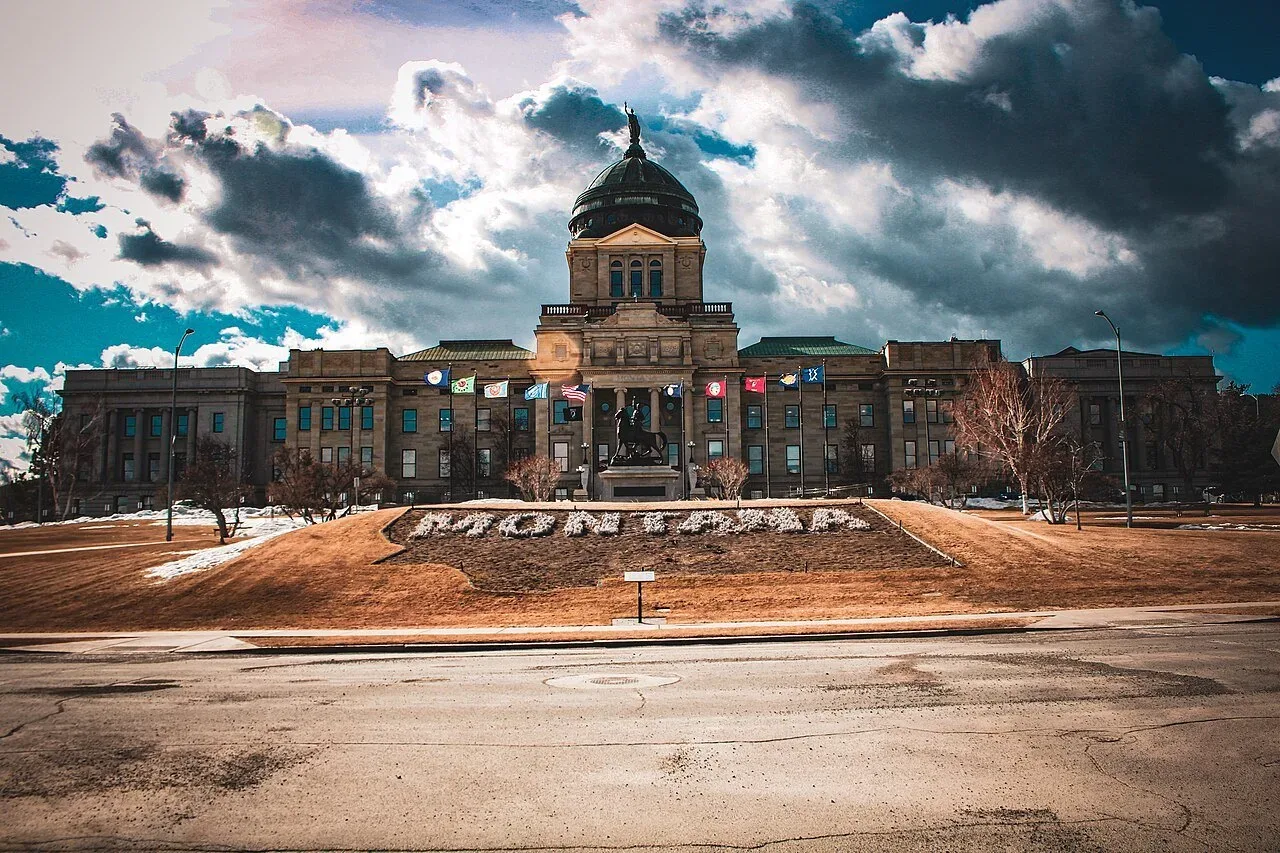
On 14 October 2026 the attorneys general of Arizona, Arkansas, Idaho, Iowa, Kansas, Montana, Nebraska and West Virginia each sued OpenAI in state court, alleging ChatGPT was designed to keep minors engaged, misled parents about safety and broke privacy law. The claims are unproven.
Table of contents 6 sections
- Eight state attorneys general sued OpenAI in separate state courts on 14 October 2026.
- Montana's complaint pleads six counts, including consumer protection, privacy, negligence and design defect claims.
- Montana seeks $10,000 per consumer protection violation and $7,500 per privacy violation, plus age verification.
- The state also wants advanced models tested only in secured, independently verified environments.
- OpenAI says it has built industry-leading age-specific protections and will add more safeguards.
Eight states sue OpenAI in their own courts: on 14 October the attorneys general of Arizona, Arkansas, Idaho, Iowa, Kansas, Montana, Nebraska and West Virginia each filed a separate lawsuit alleging that ChatGPT was designed and marketed in ways that harm children and mislead parents. None of the claims has been tested in court, but the coordinated filings make OpenAI the main target of state-level AI enforcement in the United States.
Why eight states sue OpenAI separately, not together
The suits were filed in state courts rather than as one consolidated federal case. That matters. Each attorney general relies on their own state's consumer protection and privacy statutes, which means OpenAI has to defend eight sets of claims in eight venues, under eight sets of procedural rules, with no single judge to persuade.
The law firm Haynes Boone, which analysed Montana's complaint in detail, notes that it names eight OpenAI entities and demands a jury trial. The case, State of Montana ex rel. Knudsen v. OpenAI Global, LLC, sits in the First Judicial District Court for Lewis and Clark County.
What Montana's complaint claims
Montana Attorney General Austin Knudsen pleads six counts: two under the Montana Consumer Protection Act, one under the Montana Consumer Data Privacy Act, and common-law claims for negligence, design defect and failure to warn.
- Design: the state argues that ChatGPT's overly agreeable replies and simulated compassion are features built to keep minors engaged for longer.
- Children's data: it alleges OpenAI collected personal information from children under 13 without parental consent and does not adequately verify ages.
- Age checks: the complaint cites news reports that OpenAI's age-prediction system at one point classified minors as adults roughly 12 percent of the time.
- Model testing: the second consumer protection count goes beyond children, alleging OpenAI repeatedly lost control of models that hacked third-party systems and withheld information about those incidents until confronted.
According to NBC Montana, the complaint also alleges ChatGPT gave dangerous advice to vulnerable users, including teenagers with mental health problems, and failed to warn about potentially deadly drug interactions.
What the other states allege
The other complaints follow a similar line with local detail. Idaho Attorney General Raúl Labrador said OpenAI has "misled the public" about ChatGPT's safety, and his office's release described the chatbot as "designed to be overly agreeable, accommodating, and to feign human compassion and connection." Iowa's suit alleges ChatGPT gives dangerous medical advice, encourages paranoia and coaches people to hurt themselves or others, Fortune reported. Arizona's says the chatbot pushes teenagers to share personal information and sometimes discourages them from telling parents or friends.
Officials say the suits draw on what they call "a growing body of research" suggesting ChatGPT may harm critical thinking and promote unhealthy relationships. These are allegations, and the research behind them will be argued over in each courtroom.
What the states want: money, age checks and lab rules
Montana seeks civil penalties of $10,000 for each Consumer Protection Act violation and $7,500 for each privacy violation, plus disgorgement, restitution and damages. Because penalties are counted per violation, the theoretical exposure across millions of users is large, although courts rarely award anything near the maximum.
The non-monetary demands may matter more. Montana asks for deletion of children's data collected unlawfully, a halt to processing until OpenAI requires age verification, a bar on testing advanced models outside a secured and independently verified environment, and prompt notice to the attorney general whenever a model or agent escapes its controls. That last request ties a consumer case to lab safety, which is unusual and will be closely read by other states.
How OpenAI responded
OpenAI spokesperson Drew Pusateri told NBC News the company has "built industry-leading age-specific protections into our product that many other AI products lack." He added that no system can be perfect and said OpenAI will keep adding safeguards, including parental controls, break reminders and age-appropriate model protections. The company also said it wants to work with states on AI rules that apply to the whole industry rather than to one company.
In September OpenAI introduced a version of ChatGPT for users aged 13 to 18 with extra safety measures and parental controls. The states' filings argue those changes came too late or do not go far enough.
What happens next
OpenAI has not yet filed public answers to the complaints, so its legal defence is still unknown. The cases also land in a busy moment. Florida brought its own suit against OpenAI earlier this year, the family of 16-year-old Adam Raine has sued the company, and on 28 October New York signed a law banning AI companion features that pose as friends or partners to children.
The US still has no federal AI child-safety law, which is why states are using older consumer statutes. That is a different route from Europe, where obligations are written into a single regulation, as our EU AI Act explainer sets out. Parents who want protection now do not need to wait for a verdict: ChatGPT's teen version and parental controls are already available, and they are worth switching on for any child who uses it.
Frequently asked
- Eight States Sue OpenAI Over ChatGPT's Marketing and Design for Minors — Haynes Boone
- Montana attorney general sues OpenAI over alleged harm to children and teens — NBC Montana
- OpenAI faces lawsuits from 8 states over ChatGPT's impact on children — TMJ4 / Scripps News
- New York bans AI chatbots from romantic roles with kids — Fortune

0 comments
No comments yet — be the first.