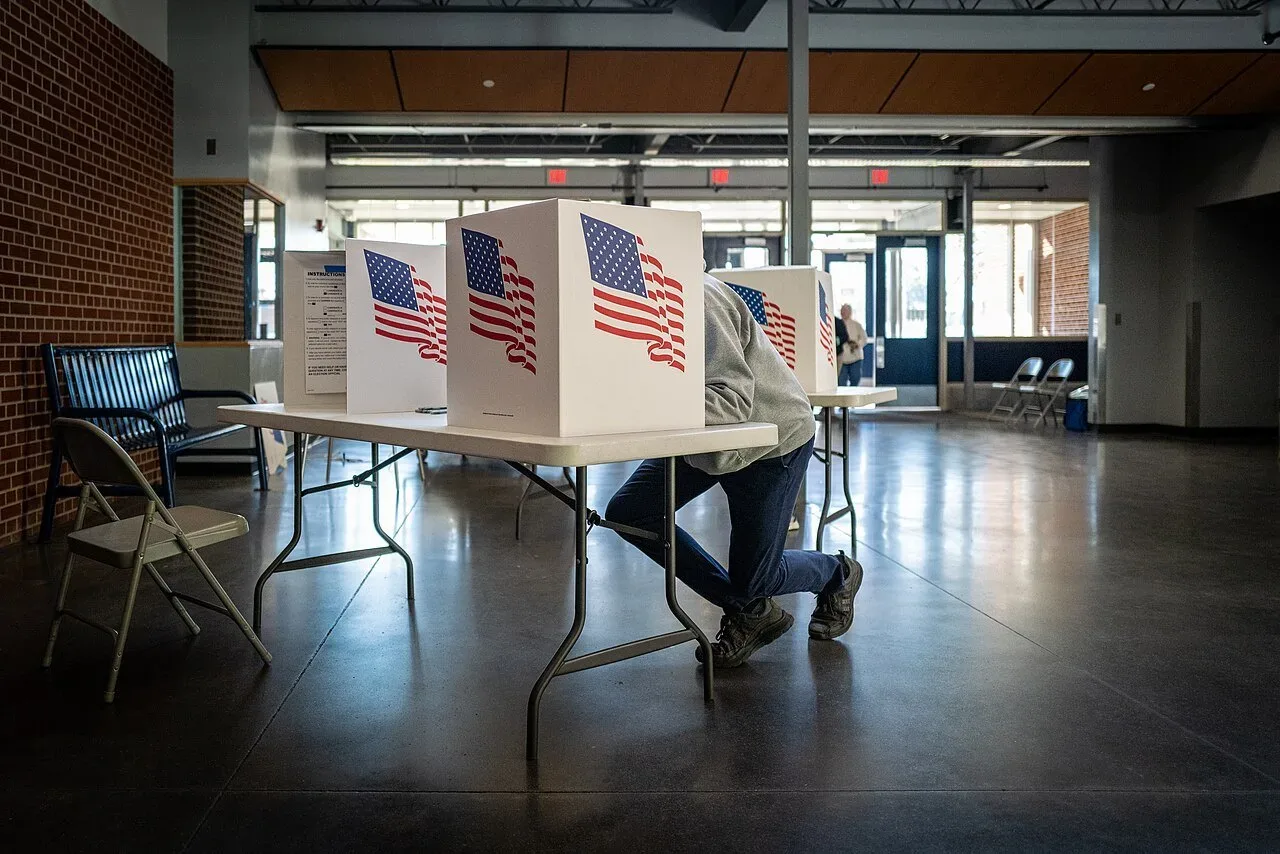
In the 2026 US midterms, campaigns and outside groups spent more than $137 million on ads made at least partly with AI, according to the Wesleyan Media Project, which counted 220 such ads up to 11 October. Only 27% carried an AI disclaimer, and there is no federal disclosure law.
Table of contents 6 sections
- The Wesleyan Media Project counted 220 AI-made or AI-assisted political ads worth more than $137 million up to 11 October 2026.
- Only 27% of those ads carried an AI disclaimer, and the 2024 cycle saw about $50,000 of such spending.
- Republican-aligned sponsors accounted for 81% of the ads and 88% of the spending.
- At least 31 states have election deepfake laws, but there is no general federal disclosure requirement.
- Pew found 8% of US adults use AI chatbots for election information.
Campaigns and outside groups have spent more than $137 million on AI campaign ads in the 2026 midterms, according to a Wesleyan Media Project tally of ads running up to 11 October, and only 27% of them carried any AI disclaimer. With the election on 3 November and early voting already under way in many states, synthetic video has gone from novelty to routine in a single cycle.
How much AI campaign ads have grown since 2024
The Wesleyan Media Project identified 220 political ads made at least partly with AI. In the whole 2024 cycle it found about $50,000 of spending on AI-generated ads. Co-director Erika Franklin Fowler said AI "is making its way into the 2026 midterms in a big way," and the project says its count is almost certainly too low, because it relies on news mentions, ads that disclose AI use and its own monitoring.
The split is lopsided. Republicans and Republican-aligned groups sponsored 81% of the AI ads and accounted for 88% of the spending, Democrats 12% of the ads, with independents making up the rest, according to figures reported by IBTimes UK. The cost argument explains the boom: ad maker Fred Davis said a scene that once cost about $2 million to film can now be generated for about $200,000.
The ads that drew the most complaints
- Texas: a National Republican Senatorial Committee video showed Democratic Senate candidate James Talarico reading his old tweets and voicing comments he never made. Hany Farid of UC Berkeley said most viewers would not immediately realise it was fake because its "AI GENERATED" tag is small and faint. Talarico's own ads now end with "Made by humans, not A.I."
- Georgia: a Senate Leadership Fund ad showed Senator Jon Ossoff receiving beauty treatments in a salon, with no AI disclosure. Ossoff demanded its removal and called such deepfakes "deeply troubling."
- Michigan: a Front Line Action ad showed fabricated video of Democratic Senate candidate Abdul El-Sayed laughing at cards reading "Death to America." It carried an AI disclaimer, and the PAC said it was grounded in his public statements.
Look at the pattern. The most effective fakes are not wild fabrications. They put a candidate in an ordinary-looking scene, saying or doing something plausible, which is much harder to dismiss.
Can voters tell what is real?
Mostly not. A Utah Valley University study in June found only 16% of more than 600 participants could tell a real video from a fake, and people who described themselves as experts did no better. A Scripps News and Talker Research poll of 1,000 registered voters found 43% had seen an ad they believed was real before learning it was AI.
Chatbots add a second channel. Pew Research Center's survey of 5,273 adults, run from 12 to 18 October, found 8% of US adults use AI chatbots for information about the 2026 elections, rising to 11% of adults under 50. Among those users, 76% ask where candidates stand on issues and 40% ask for suggestions on how to make their vote choices. That is a small share of voters for now, but it is the share most likely to meet an answer that is incomplete or wrong.
What the law requires, state by state
There is no generally applicable federal law requiring political ads to disclose AI use. A federal disclaimer bill, H.R. 9922, has been introduced in the House but has not passed. That leaves the states. At least 31 have laws on election deepfakes, according to the National Conference of State Legislatures' 13 October update, ranging from outright restrictions to disclosure rules.
The laws do not seem to be changing behaviour much. Oren Etzioni, founder of TrueMedia.org, read the Wesleyan data and found 29% of AI ads were labelled in states with such laws, compared with 32% in states without them. He has proposed that paid ads showing a person who did not consent should carry a plain on-screen and audio label or not air at all. The political consultants' trade group wants one national standard instead of a patchwork.
Public opinion is clear even if the law is not. In the Scripps poll, 77% of Democrats and 79% of Republicans said they want rules on AI in politics.
What the AI companies say they are doing
According to a round-up by eWeek, OpenAI has set up an election operations centre, bans political advertising and scaled campaigning through its tools, and turns requests for images of election interference into stylised illustrations rather than realistic pictures. Brennan Center testing found ChatGPT converted nearly all election-disinformation prompts into illustrations in October, though Gizmodo reported a workaround that produced a photorealistic image. OpenAI also said it disrupted influence operations of Russian and Iranian origin that used its tools. Google and Meta say they have extensive election safeguards.
What to do before you vote
- Treat any clip that makes a candidate look shocking as unverified until a news outlet or the campaign confirms it.
- Look for disclaimers, but do not rely on them: most AI ads carry none.
- Check polling places, hours and registration on your state or county election website, not through a chatbot.
- Use the same habits you would use on a suspicious email, which we cover in our guide on how to spot a phishing email: slow down, check the source, and do not share before checking.
After 3 November, watch for the Wesleyan project's final tally and for whether Congress takes up a federal disclosure rule before the 2028 cycle.
Frequently asked
- Few Americans say they are asking AI chatbots for 2026 election information — Pew Research Center
- $137M AI Ad Deluge Hits US Midterms — International Business Times UK
- AI in the 2026 Midterms: Deepfakes, Chatbots, and Election Security — eWeek
0 comments
No comments yet — be the first.